








Warialda Rail Fruit Trees (Popular)
Warialda Rail Fruit Trees and the most popular plants Australians buy for mail order. With fruit trees you should consider climate suitability.
Mandarin - Imperial
$39.00 ($39.00-$99.00 choose a size)
A proven early variety that is still very popular today. Excellent colour and flavour; the skin is smooth, glossy, thin and easy to peel. Older trees may develop a biennial bearing habit.


Orange - Midknight Seedless
$34.00
A Valencia orange selection maturing 2 - 4 weeks ahead of other Valencias. Very thin rind. Large round virtually seedless fruit. Excellent flavour.
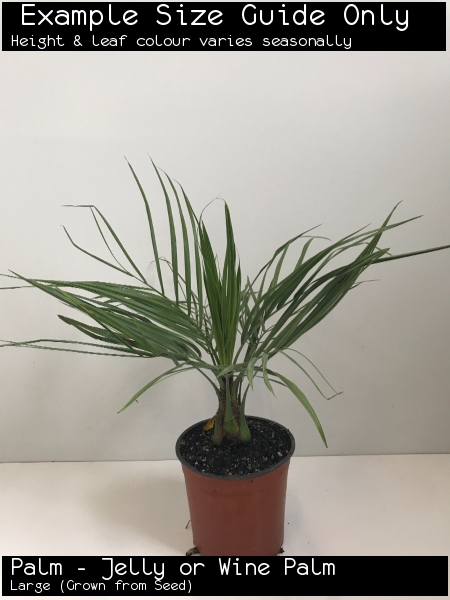
Palm - Jelly or Wine Palm
$24.75 ($14.90-$24.75 choose a size)
The Butia or Jelly palm yields a host of edible and useful products. They have large stalks of golden fruit in clusters. The fruit is green before it ripens, then turns golden, sometimes having a reddish tinge when ready to eat. Soft, tasty flesh surrounds a hard seed that looks like a miniature coconut. Simply peel the flesh away and eat it, prepare a soft puree, or use Butia Palm fruit in jelly. The taste is delicious and starts out like apple and transforms into tropical like flavours similar to an apricot/banana mix. Although delicious when eaten fresh they are most often preserved due to their stringy fibrous flesh. Jelly palm fruits are picked as they ripen. If whole bunches are harvested, they tend to ripen all at once. They keep well under refrigeration for around a week. This South American palm is native to Brazil and is the hardiest feather-leafed palm in cultivation. The palm has beautiful blue-green leaves that are strongly curved making it instantly recognisable. It is an essential palm for the exotic garden and is also a wonderful indoor plant providing light is adequate. For best results fertilize the Palm in the spring, and in mid summer. The spent leaves should be cut to improve its appearance. A long living palm (over 20 years) it enjoys full sun or part shade and thrives in a sandy loam soil. Adequate moisture will greatly improve yields. It is salt, drought and cold tolerant so can be grown in a range of environments

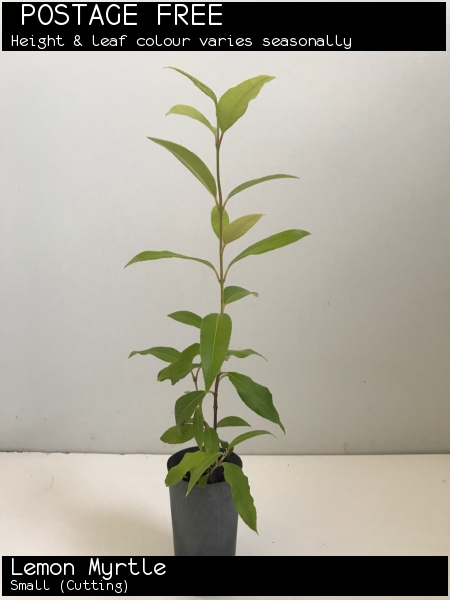
Lemon Myrtle
$18.75 ($18.75-$34.00 choose a size)
The Lemon Myrtle occurs naturally throughout coastal Qld rainforests. It is a spectacular ornamental tree due to both its appearance and the superb fragrance of its flowers and leaves. The leaves and flowers are used in sweet and savoury dishes or as a refreshing tea. However as boiling or baking often reduces the flavour. The leaves are best added to the recipe at the end of the cooking process and either left to steam with the lid on or made into a sauce or dressing. It is usually the older and fully hardened-off leaves that are harvested for use. Enthusiasts describe the distilled oil from this tree as 'more lemony than lemon' and its used extensively to scent confectionery, perfumes, aromatherapy oil and food flavourings.

Yacon - Apple of the Earth
$19.75 ($4.90-$19.75 choose a size)
Also known as the 'Earth Apple' this is one of the ancient crops of the Inca's. This relative of the sunflower is popular to the people of Columbia, Ecuador and Argentina. The plant produces large tubers similar in appearance to sweet potatoes, but they have a much sweeter taste and crunchy flesh. The tubers can be eaten raw as a refreshing treat on their own, finely sliced and mixed into salads,boiled or baked, fried as chips or prepared as a pickle. There is also commercial interest as a flavouring for yoghurt. They are sweet, juicy and almost calorie free. The main stem can also be used like celery. The texture and flavour have been described as a cross between a fresh apple and watermelon. The plants are vigorous, herbaceous, perennial and extremely hardy tolerating hot summers, drought and poor soils. The foliage of the plant dies back in the winter after flowering at which time the tubers are harvested carefully to avoid damage to the tubers. They tend to continue sweetening if left in a cool dry and dark place for a week or two before consumption. The reddish rhizomes are then replanted for the next season.