









(1/6)

(2/6) YouTube: Daleys Staff go to Brindle Creek subtropical Rainforest.

(3/6) Sharing the joys of growing a Rainforest By Paul Daley ©A Lush Forest [All Rights Reserved, Used By Permission] (Photo Credits)

(4/6) Rainforest By Paul Daley ©A Lush Forest [All Rights Reserved, Used By Permission] (Photo Credits)

(5/6) Rainforest remnant at Red Mountain Cawongla

(6/6) Rainforest Plants
Rainforest Trees
CategoryGenerally rainforest trees can be split up into Understorey Plants, Primary Species, Secondary Species and Mature but there is some overlap... Read More
Category
Cabinet Timber Trees
Trees and Plants > Rainforest Trees > Cabinet Timber Trees
The Cabinet Timber Trees are high quality rainforest trees that are great for people with a larger block and who can harvest the timber in about 10-20 years. They are suitable for creating impressive furniture.


Category
Pioneer Plants
Trees and Plants > Rainforest Trees > Pioneer Plants
A list of Pioneer Plants for the australia environment.


Category
Riparian Trees
Trees and Plants > Rainforest Trees > Riparian Trees
Planting along water courses and creeks for controlling erosion.


Category
Understorey Plants
Trees and Plants > Rainforest Trees > Understorey Plants
The plants that grow beneath the forest canopy. They are the underbrush or undergrowth that makes a rainforest lush down to ground level. Often these plants can grow in very low light.


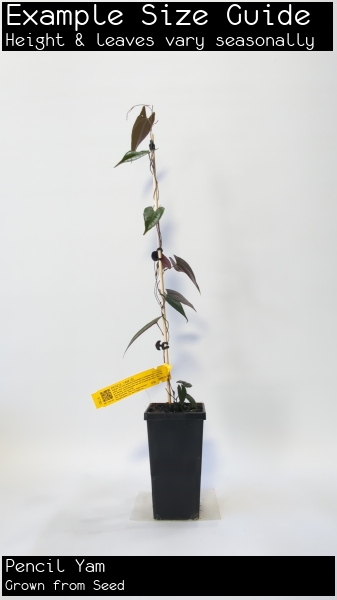
Pencil Yam
$19.75
Slender vine with distinctive arrowhead to heartshaped leaves. Tubers are edible, when young as a raw food and when mature, better cooked. Tubers are slender, pencil thickness and can be buried quite deep, to 30cm. The distinctive seed pods of the female vine are an attractive feature. Will tolerate the deep shade of a forest floor but also full sun. Try growing them in a deep pot to make harvest easier
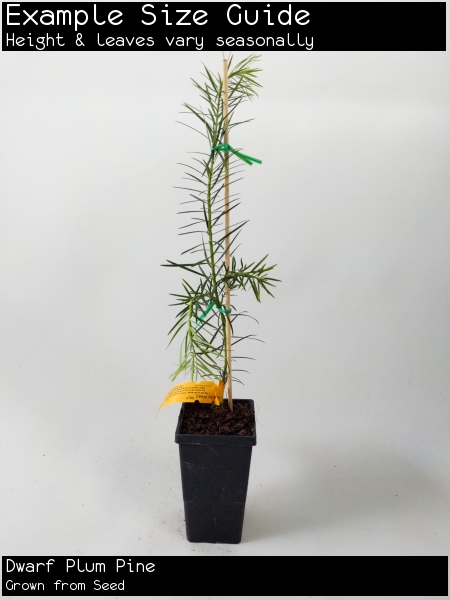
Dwarf Plum Pine
$17.90 ($17.75-$17.90 choose a size)
Dwarf Plum Pine is a member of an ancient family of conifers called Podocarps. The fruit of this specimen is much like it's tall cousin the Plum Pine - Podocarpus elatus, where the fleshy, edible part is actually a swollen stem that holds the seed. The 'fruit' is sweet and refreshing with a jelly like texture. Dwarf Plum Pine is a medium shrub or small tree usually around 2m, with glossy leaves that end in a sharp point. The trees are dioecious, meaning male and female parts are on separate trees. It is best to plant at least 3 seedling to ensure there is the likelihood of at least one female. The tree is found in sheltered East Coast locations and gullies in adjacent ranges.
North Bauple Nut
$19.75
The mauve flowers of this tree are beautiful, hanging from the trunk and the branches, followed by striking bunches of red fruits. Beautiful foliage and burgundy new growth make it an ornamental specimen for gardens and rainforest plantings. Native to Far North Queensland, it is surprisingly adaptable, as it is able to tolerate light frosts. The nuts have been known to be eaten but may contain small amounts of cyanide so caution should be exercised

Lilly Pilly Select
$16.90
A dense growing Lilly Pilly with psyllid resistance that forms an excellent screen or privacy wall. Growth is quick in good conditions and it can be clipped to shape, with bronze coloured new growth. White flowers form during summer followed by pink edible fruits. This variety is suitable for topiary. Best growth is see when the plant is grown in full sun.

White Bean
$14.90
White Bean is a fast growing tree found on the Eastern seaboard, north from the Clarence River, NSW to North Qld and into SE Asia. It has a handsome form, as the tree develops an open branched structure, and the compound leaves cluster at the ends of the branches giving the foliage a feathery look. Attaining a maximum height of 35m and a stem diameter of up to 80cm when fully grown, it is a wonderful addition to rainforest regeneration plantings. It is well adapted to dry periods and does like good drainage in wet times.
Popular in Category: Rainforest Trees
Special
Lilly Pilly - Riberry
$18.75 ($3.75-$19.90 choose a size)
The small leaved lilly pilly produces masses of red pear shaped fruit. Its handsome purple-red growth makes this lilly pilly one of the favourites as an Edible Hedge. The fruit exhibits a juicy but slightly acidic finish. Which is reminiscent of cinnamon and cloves. It is a very popular ingredient in wild-food dishes.


Aramex Free Freight
Special
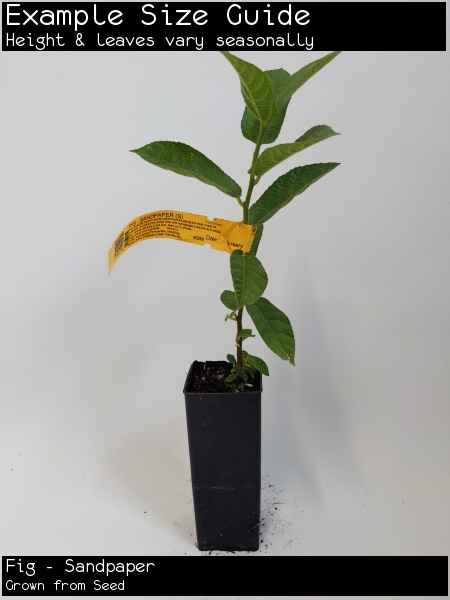
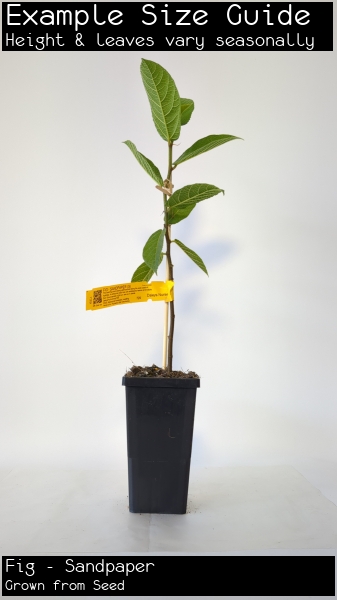
Fig - Sandpaper
$2.75 ($2.75-$18.75 choose a size)
This small fig occurs along watercourses along the east coast of Australia. An attractive small tree with sandpapery leaves and edible fruit. Grows densely in full sun, less so in shade. Very good for stream bank stabilisation.

Buy 4+ @$2.75ea usually:$4.90ea
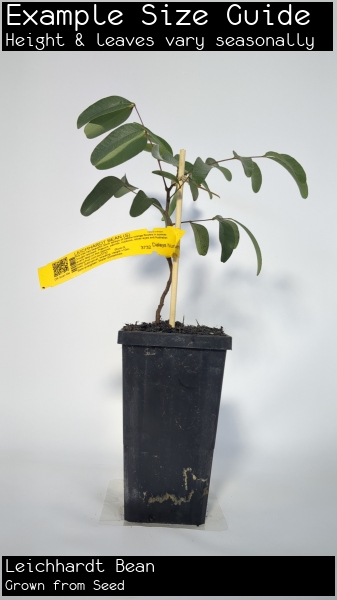
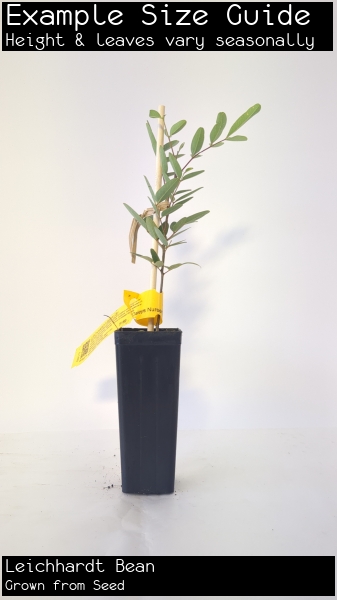
Leichhardt Bean
$18.75 ($4.90-$18.75 choose a size)
Rare native tree with beautiful 30cm sprays of yellow-orange flowers in summer. Drought resistant. Pigeons, parrots, cuckoos, silver eyes and Australian ravens feed on this species. Grows in coastal forests from Northern NSW to North Qld and ranges in height from 4 - 10+ m in height

Aramex Free Freight
Special
Lomandra longifolia - Mat Rush
$2.40 ($2.40-$18.75 choose a size)
Extremely versatile and hardy bush tucker plants that will grow almost anywhere. An important stabilizing plant for stream banks, as well as a useful ornamental grass in native gardens. Pull the leaves out from the base of the clump and chew the white fleshy base of them, they taste a little like sweet peas. The lusher the growing conditions, the better the taste. Flowers are high in nectar and can be soaked in water for a flavoured, refreshing drink. Mature seed can be ground into a flour to make a damper. The strap-like leaves make great weaving material too.


Buy 16+ @$2.40ea usually:$4.90ea
Special
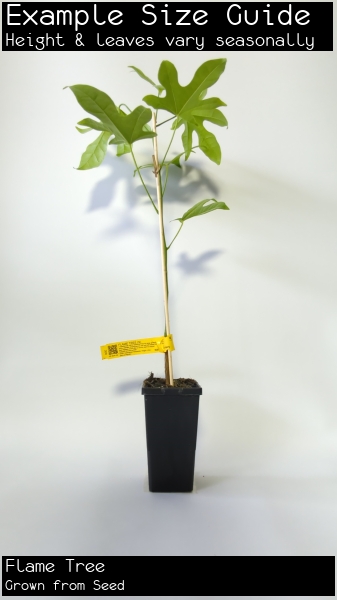
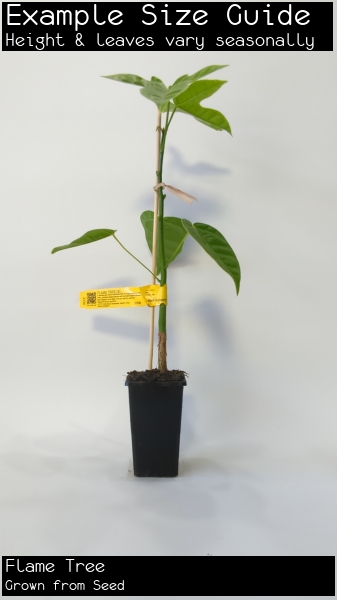
Flame Tree
$12.90 ($4.90-$17.75 choose a size)
A spectacular native rainforest tree for large gardens. Bright green, shiny, palmate shaped leaves with red bell-shaped flowers in summer. The best displays occur after a hot dry start to summer The tree flowers when it is deciduous and sometimes flowers spectacularly in the Christmas holiday period. They stand out in native forest vistas during this time. Tolerant of most soil types and positions.

Buy 1+ @$12.90ea usually:$14.90ea
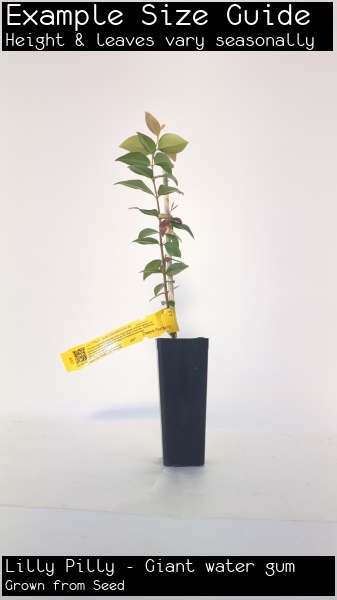
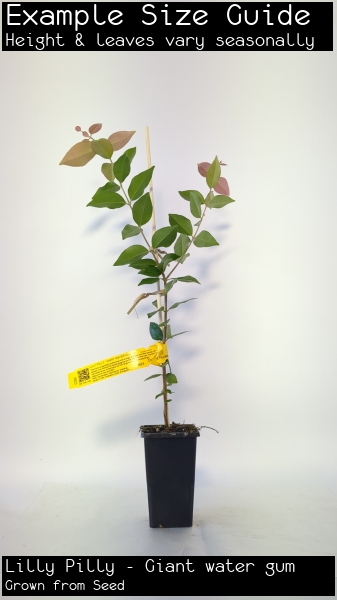
Lilly Pilly - Giant water gum
$4.90 ($4.90-$14.90 choose a size)
The trunk is generally buttressed with a large diameter and the canopy can spread over almost the same distance as the height of the tree. Sometimes cultivated as an ornamental but too large for household plantings.
Special
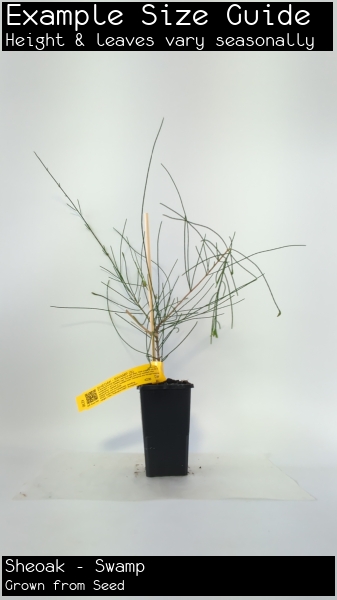
Sheoak - Swamp
$2.75 ($2.75-$14.90 choose a size)
A strong growing species, native of wet sites. Well suited to use as a windbreak or as a shelter tree. Drought and frost resistant when established. Conical or rounded tree. Casuarina are nitrogen fixing plants

Buy 4+ @$2.75ea usually:$4.90ea
Tamanu - Calophyllum inophyllum
$19.90 ($18.75-$19.90 choose a size)
Very attractive and large shade tree, with glossy leaves on far reaching branches. Fragrant flowers suitable for honey production. Growing on North Queensland beaches and throughout the Polynesian Islands. It is frost sensitive. Tamanu Oil, extracted from the fruit of Calophyllum inophyllum is renowned for its remarkable uses in traditional medicines. A long lived tree with


Special
Lomandra hystrix - Mat Rush
$2.45 ($2.45-$17.75 choose a size)
This hardy Bushfood plant has arching strap-like leaves and yellow-green flower spikes in spring. Suited to wet soils and is ideal for use around water features. It prefers part shade though will tolerate full sun. It can also be used indoors and will accept a wide range of soils and climates. Useful for drainage swales and erosion control. Like its cousin Lomandra longifolia the base of the leaves make a tasty snack. Pull the leaves out from the base of the clump and chew the white fleshy base of them, they taste a little like sweet peas. The lusher the growing conditions, the better the taste. Flowers are high in nectar and can be soaked in water for a flavoured, refreshing drink. Mature seed can be ground into a flour to make a damper. The strap-like leaves make great weaving material too.


Buy 16+ @$2.45ea usually:$4.90ea
Special
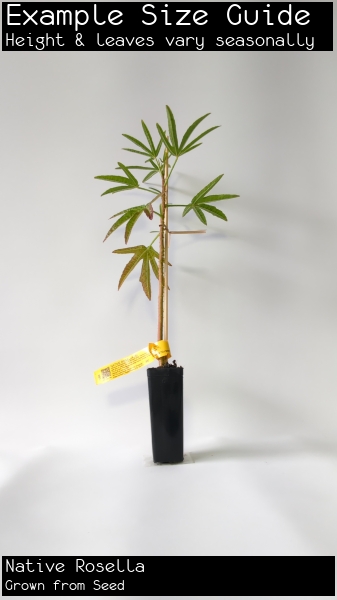
Native Rosella
$14.75 ($4.90-$17.75 choose a size)
Hibiscus heterophyllus is a tall erect shrub. The flowers may be white, pale pink or yellow with a large crimson central flute and are up to about 15 cm across. The leaves are either narrow, broader or deeply lobed, up to 15 cm long. 6m. Unlike Rosella the Native rosella has no edible calyx however the flowers and leaves are still edible. It is also used to make rope.
Buy 2+ @$14.75ea usually:$17.75ea Aramex Free Freight