







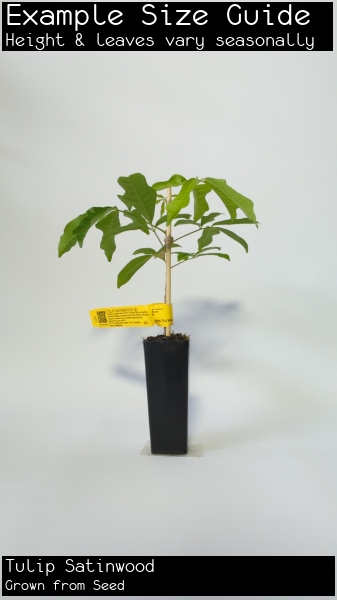
(1/3) Tulip Satinwood
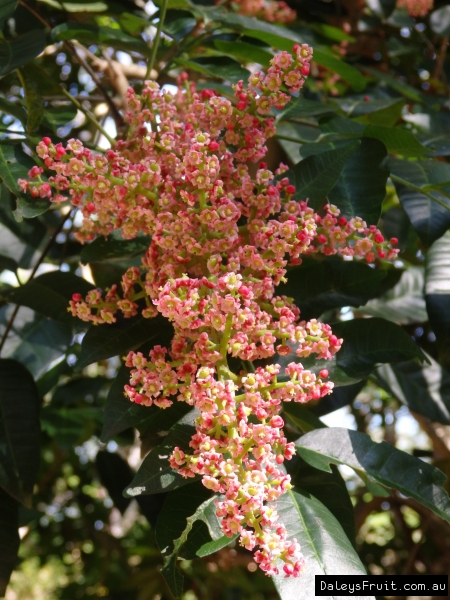
(2/3) Tulip Satinwood For Sale

(3/3) Leaf of the Tulip Satinwood
Tulip Satinwood
Rhodosphaera rhodanthemaOccurs naturally North N.S.W. to South Qld in dry rainforests. A tree with attractive foliage, red flowers and brown berries. Pale yellow timber valued for cabinet work. Excellent landscape tree.
Other Names: Deep Yellow Wood, Yellow Cedar
$9.90 ($4.90-$14.75 choose a size)
Specifications of Tulip Satinwood
Preferred Climate SubtropicalLearn About Climate Zones
Grown From SeedlingLearn About Propagation Methods
Max Height (when in the ground with good conditions) 10m+
Can it Handle Frosts? Yes
Amount of leaves in Winter? All Leaves (Evergreen)
Water Requirements Drought Hardy (Little Watering)
Customers also bought
These plants are often purchased together. Also check plant information for suitability in your orchard.
Chestnut - Winchester
$59.00
A large low chill selection suitable for the sub tropics, sets well on its own but will benefit from cross pollination.

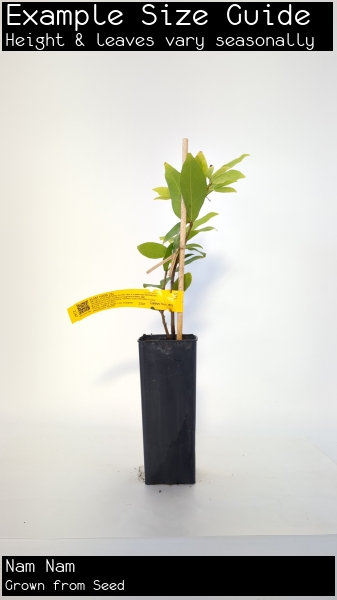
Nam Nam
$49.00
Belonging to the bean family the nam nam is a small multi-stemmed tree. The texture of the fruit surface is rough and wrinkled, pale greenish/yellow and dull looking. The flesh is juicy and yellow in colour. It tastes sourish and has large seeds. The mature fruit can be eaten fresh or cooked with sugar to make sweets (compote). It can also be made into a fruit salad, pickled, or be used to prepare a special 'sambal.' The tree makes an attractive ornamental plant in home gardens and is also potted and grown as bonsai plant.Suited to tropical areas only
Special
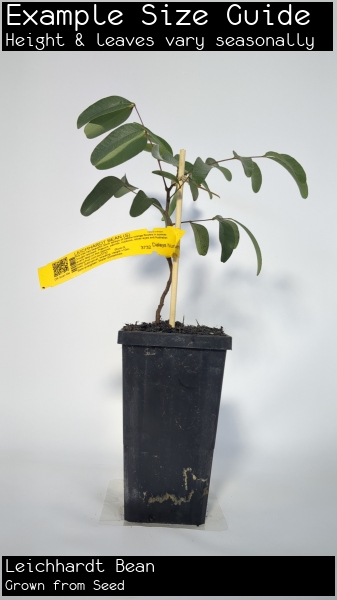
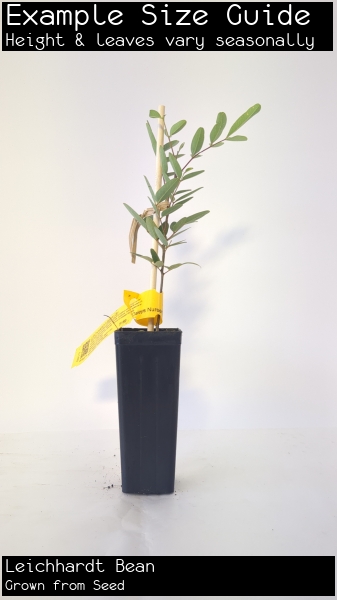
Leichhardt Bean
$18.75 ($3.75-$18.75 choose a size)
Rare native tree with beautiful 30cm sprays of yellow-orange flowers in summer. Drought resistant. Pigeons, parrots, cuckoos, silver eyes and Australian ravens feed on this species. Grows in coastal forests from Northern NSW to North Qld and ranges in height from 4 - 10+ m in height

Aramex Free Freight
Bunya Nut
$19.75 ($4.90-$29.00 choose a size)
A handsome large tree for parks and gardens. This extraordinary bush food produces large edible nuts inside large cones. They are delicious roasted or pressure cooked. Then slice them and shuck the kernel and use in a wide range of recipes. The trees produce dense shade and are cold tolerant. A symmetrical pine suitable for container growing when young as they a slow growing to start. Trees take up to 15 years to produce the large cones, which ripen mid summer. No-one should stand or park under one of these at that time, as they fall from a height when ripe. These trees were and still are very important to the cultural practices of First Nations peoples of the East Coast especially southern Queensland, producing bumper harvests every 3 years, drawing peoples to the region to share.


Click Choose above to view Specials
Peanut Butter Tree
$21.00 ($19.75-$39.00 choose a size)
This attractive tree has clusters of yellow flowers that are followed by an abundance of dark red fruit to around 2.5cm long. The rich, sweet flesh has a texture similar to peanut butter. The fruit can be eaten fresh or made into milk shakes.


Click Choose above to view Specials
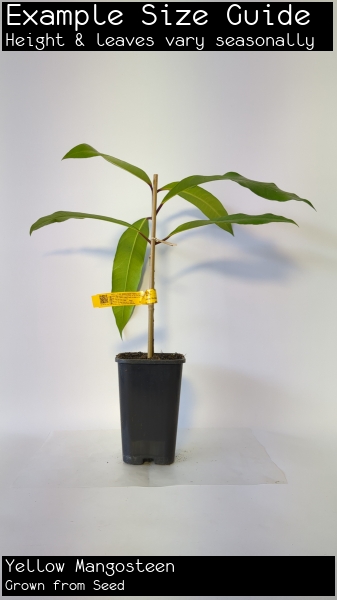
Yellow Mangosteen
$34.00 ($24.00-$79.00 choose a size)
Yellow Mangosteen is a round fruit with very tart yellow segments. The high acidity makes it ideal for jams and jellies but removing the seed and skin can be time consuming. Easier to grow in the subtropics than the purple mangosteen, but the flavour is altogether different. The tree grows well in full sun and shade. It will tolerate and continue to fruit heavily in drought conditions. The tree is very attractive, with large drooping leaves and a layered form. The fruit can reach 8-10 cm in length and looks highly ornamental when in the tree. Pairs so well with a Miracle Fruit to reduce the acid flavour and bring out the interesting tropical flavours.