







Gymea Lily Doryanthus excelsa flowering

(1/4) Gymea Lily Doryanthus excelsa flowering By Rexness from Melbourne, Australia [CC BY-SA 2.0] (Photo Credits)

Gymea Lily For Sale

(2/4) Gymea Lily For Sale

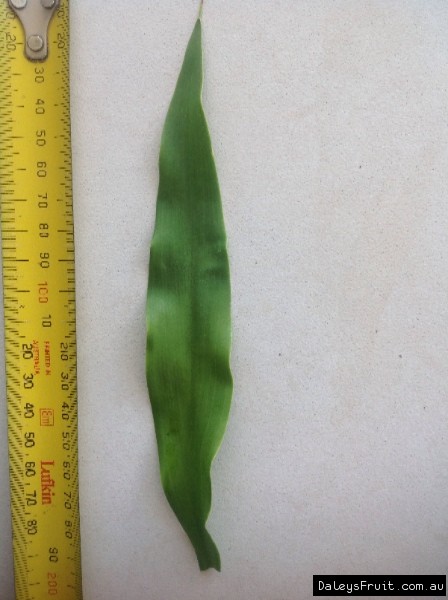
Leaf of the Gymea Lily

(3/4) Leaf of the Gymea Lily

Gymea Lily For Sale

(4/4) Gymea Lily For Sale

fullscreen1

Gymea Lily

Doryanthes excelsa
Large leaves and large upright bright red flower heads. Grows best in partial shade but will tolerate full sun. Frost hardy although flowers can be damaged by heavy frost. Excellent accent plant or large container plant.

$19.90 ($4.90-$19.90 choose a size)

Specifications of Gymea Lily

Preferred Climate SubtropicalLearn About Climate Zones

Grown From SeedlingLearn About Propagation Methods

Max Height (when in the ground with good conditions) 2-5m

Can it Handle Frosts? Likes Temps above 5deg

Amount of leaves in Winter? All Leaves (Evergreen)

Customers also bought

These plants are often purchased together. Also check plant information for suitability in your orchard.
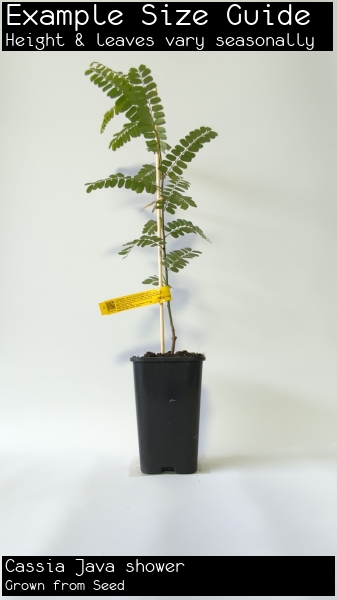
Cassia Java shower

$42.95 ($21.75-$42.95 choose a size)

Partly deciduous tree producing new foliage in late spring followed by a heavy crop of rosy-pink flowers. Produces long, dark-brown cylindrical seed-pods that hang from the crown. Very fast growing

Pepper - Black

$29.00 ($29.00-$39.00 choose a size)

Cultivated for the fruit which is dried and used as a spice and seasoning. The fruits are dark red when fully ripe. Immature fruits can be picked as green pepper, black pepper is the fruit dried with the skin on and white pepper is the dried seed only. Black pepper is the worlds most widely traded spice.
Click Choose above to view Specials
  Special  

Leichhardt Bean

$3.75 ($3.75-$18.75 choose a size)

Rare native tree with beautiful 30cm sprays of yellow-orange flowers in summer. Drought resistant. Pigeons, parrots, cuckoos, silver eyes and Australian ravens feed on this species. Grows in coastal forests from Northern NSW to North Qld and ranges in height from 4 - 10+ m in height
Buy 4+ @$3.75ea usually:$4.90ea
  Special  

Casuarina - Cousin It

$14.75 ($14.75-$24.00 choose a size)

Unique, strange, fun and nitrogen fixing! This prostrate cultivar of Casuarina glauca, Swamp Sheoak, is popular plant with a character all of its own, with fine 'hairy' strands of evergreen cascading foliage. Use as a ground cover or feature plant in rockeries, where it will spread to 1m across but only 10 - 20cm high. Low maintenance, competes well with weeds.
Buy 4+ @$14.75ea usually:$18.75ea Aramex Free Freight

Sweet Leaf Bush

$18.90 ($18.75-$18.90 choose a size)

Sweet Leaf Bush has been a popular leafy green perennial vegetable in Malaysia (especially Borneo) for many years.The crop grows rapidly in hot humid conditions but becomes relatively dormant in cooler environments. It will grow in acid soils and in heavy clay soils.The leaves and the top 15cm of stem tips of the Sauropus plant have a pleasant taste, similar to fresh garden peas, with a slightly nutty flavour. It is one of the most popular leaf vegetables in Southeast Asia and is notable for high yields and palatability.[6] The shoot tips have been sold as tropical asparagus. In Vietnam, the locals cook it with crab meat, minced pork or dried shrimp to make soup. In Malaysia, it is commonly stir-fried with egg or dried anchovies.WARNING: Do not use raw in green smoothies. People using the leaves in this way can ingest large amounts and have subsequently developed significant health issues affecting the lungs. Small amounts used raw in salads is generally fine to ingest. Used in cooking, it is very safe.
Click Choose above to view Specials
  Special  

Cassava

$4.95 ($4.95-$19.75 choose a size)

The tuberous root is white and has a satisfying but bland taste. Harvest can start from earlier than 12 months. Tubers are best dug when small and used within a couple of days or stored in the ground on the plant.Cassava is a shrubby plant growing to about 1-3m, with thin stems and attractive large palm-shaped leaves. A perennial shrub cassava produces a high yield of tuberous roots in 6 months to 3 years after planting. The tubers are the main part that is eaten, but the leaves can be enjoyed as a vegetable dish. Cassava is an important daily source of starch for 300-600 million of the poorest people around the world. It is among the most productive uses of subsistence land, producing 40% more starch than rice, and 25% more than maize. Note that all cassava is poisonous!! In some bitter varieties, all parts of the plant are laced with a highly toxic poison (hydrocyanic or prussic acid). Sweet varieties have lower or marginal concentrations of the toxin. But the more toxic varieties produce bigger tubers! Plants from the tropics have evolved toxins as a defence against predators more so than those from temperate climates which is why they require cooking in order to eat them. Thorough cooking dispels or denatures the harmful toxins, and makes the remaining portion safe to eat. Powdered cassava is treated like a flour and made into cakes, unleavened bread, pasta, crackers. Sliced cassava is also made into crisps. Flat bread made from cassava meal can keep for a year without spoiling. Dried chips or pellets are used as animal feed. Young tender leaves are rich in Vitamin B and protein, but also has more of the toxins. They are eaten as a vegetable. Like the tubers, they have to be boiled for minimum 15-20 mins in an open topped vessel to remove their toxins.Best grown without the use of fertilisers as too much vegetative growth is promoted at the expense of tubers
Buy 4+ @$4.95ea usually:$7.90ea

Gymea Lily Reviews & Tips

Star Rating

Barry
★★★★★ 2y ago

KOORINGAL, NSW

Gymea Lily

Gymea Lily seems to be going strong.

  • Subscribe
  • Postage Free Truck
  • Plant List
  • Calculate Freight