








Christie Downs Fruit Trees (Popular)
Christie Downs Fruit Trees and the most popular plants Australians buy for mail order. With fruit trees you should consider climate suitability.
Special
Jujube - Chico
$114.00 ($109.00-$139.00 choose a size)
Compact and bushy, perfect for pots with round fruit flattened on the bottom. Look similar to a small apple. Pick when the whole fruit (or at least 80%) has just turned brownish red. Texture is crisp and light we consider it an excellent fresh or dried variety. Fruit size 35-45mm. Developed at the Chico institute in California, this is an early fruiting variety. (Jan - March) Cross pollinate for best results.


Buy 1+ @$114.00ea usually:$124.00ea
Amla
$34.00 ($24.00-$79.00 choose a size)
The Amla or Indian Gooseberry is a small leafy tree that grows throughout India and bears an edible fruit. Amla oil is extracted from its seeds and pulp. The amla fruit is often referred to as the "Indian Gooseberry" because of its edible, very tart taste. The pectin content makes it ideal for jam and chutneys. The tree begins to yield fruit from the third year onwards and the productivity levels are good. Amla oil is prepared from dried amla berries, which have been soaked in coconut oil for several days. This oil is one of the world's oldest natural hair conditioners. These trees are semi deciduous in the winter and spring, and may lose some leaves in transport as a stress response. This is quite normal and the plant will recover well.


Special
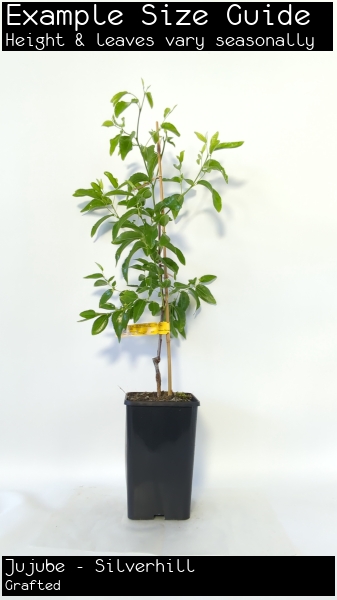
Jujube - Silverhill
$99.00 ($99.00-$139.00 choose a size)
An elongated fruit which is very sweet and the best for fresh eating. Very late season

Buy 1+ @$99.00ea usually:$124.00ea
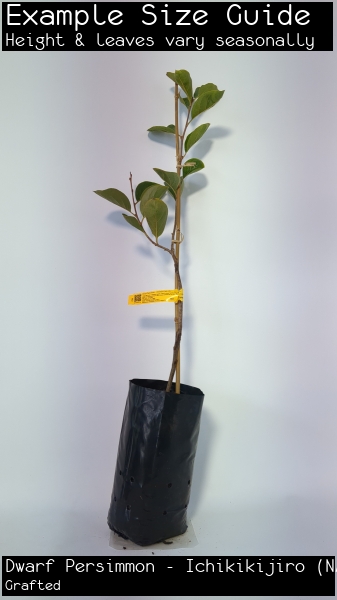
Dwarf Persimmon - Ichikikijiro (NA)
$79.00 ($79.00-$79.00 choose a size)
Large, flat fruit of excellent quality, non-astringent and seedless when grown on its own. Being a dwarf variety it is well suited to backyards but is also a good commercial variety. Will fruit as early as March in the subtropics. Ichikikijiro generally produce only one flush of growth in the spring so don't be alarmed if your tree is not growing in summer, this habit contributes to their small stature.
Drumstick Tree ( Moringa )
$24.00 ($19.75-$49.00 choose a size)
Also known as Horseradish tree or Tree of Life. It is considered one of the most useful trees in the world by some. In Asia, the peeled roots are used as a substitute for horseradish and the edible leaves make a highly nutritious vegetable. It produces long green pods that have been compared to a cross between peanuts and asparagus. Claims are made that its tiny leaves contains 7 times the Vit C of oranges, 4 times the Vit A of Carrots, 4 times the Calcium of milk, 3 times the Potassium of Bananas, and 2 times the protein of yogurt. The roots have also been documented as useful in many folk remedies. It originates in India and has spread in popularity to many parts of Asia, Central and South America, Africa and the Pacific. In Africa it has been also called the Miracle Tree with so many uses. This tree has delicate foliage and attractive pale yellow flowers. The slender, semi -deciduous, perennial tree, to about 10 m tall with drooping branches. Best kept pruned under 2m for ease of harvest. Thrives in subtropical and tropical climates, flowering and fruiting freely and continuously. Grows best on a dry sandy soil. Makes an ideal shade tree with high drought resistance. In temperate climates it may be beneficial to grow in pots for the first year or 2 when the tuberous root system can establish in a warmer position with sun on the pot. When larger they can be planted out, but still expect some dying back over winter as normal. Feed for best results, growers report good results from periodic fertilisation with good quality fertiliser, foliar sprays of seasol and the periodic application of Epsom salts if your soil requires. (Source: Nutritive Value of Indian Foods, by C. Gopalan) PLEASE NOTE: The foliage is delicate on young trees, and our potted plants are known for their older leaves to turn yellow and drop during transport to conserve energy. This is not a problem long term. With care and acclimatisation they will bounce backWARNING: Recent testing by the Australian Dept of Agriculture, Fisheries and Forestry to determine whether this 'novel' food (ie something that is not an ordinary part of the average Australian diet) is safe to eat, found that "Incomplete or inconclusive safety data means the risk cannot be adequately assessed and the safety of Moringa oleifera as a food cannot be confirmed." Therefore it is illegal to sell as a food or food ingredient.Daleys makes no claims to its edibility, but outlines historical, traditional uses in other parts of the world. https://www.agriculture.gov.au/biosecurity-trade/import/goods/food/notices/ifn05-26