






Bark of Guioa semiglauca: bark of a 43 cm diameter at breast height, Hacking River, Royal National Park, Australia

(1/4) Bark of Guioa semiglauca: bark of a 43 cm diameter at breast height, Hacking River, Royal National Park, Australia By Poyt448 Peter Woodard [Public domain] (Photo Credits)

Guioa For Sale

(2/4) Guioa For Sale

Guioa For Sale

(3/4) Guioa For Sale

Leaf of the Guioa

(4/4) Leaf of the Guioa

fullscreen1

Guioa

Guioa semiglauca
Common pioneer tree across the east coast. Makes a versatile fast growing, bird attracting tree for rainforest regeneration plots. Do not plant near dwellings as branches are brittle.

$3.90 ($3.90-$9.90 choose a size)

Shop Similar

event_busy When will it be in Stock?

We previously had the most to buy in Mar and Sep. With limited quantities for sale in other months. They are unlikely to be available in Jul and Aug. Remember to click above to get notified when it is available once more.

Specifications of Guioa

Preferred Climate SubtropicalLearn About Climate Zones

Grown From SeedlingLearn About Propagation Methods

Max Height (when in the ground with good conditions) +10m

Amount of leaves in Winter? All Leaves (Evergreen)

Customers also bought

These plants are often purchased together. Also check plant information for suitability in your orchard.

  Special  

Lime - Australian Desert Abundance PBR

$89.00

Selection of unique native Lime from inland Australia, with great flavour and zing. "Abundance" is an earlier ripening cultivar with outstanding adaptation to heat and cold from its natural habitat. Trees grow to only 2.5m. Plants are thorny to prevent herbivores from browsing but top-most branches out of their reach are thornless and these quality grafted plants are produced from these thornless upper branches. From flowering to fruiting is generally only 3 months, making this a great backyard plant. This plant has Plant Breeder's Rights over it.
Buy 1+ @$89.00ea usually:$99.00ea
  Special  

Lime - Australian Desert 'Standout' PBR

$89.00

Selection of unique native Lime from inland Australia, with great flavour and zing. "Standout" is a later ripening selection with large fruit and leaves. Desert Limes have outstanding adaptation to heat and cold from its natural habitat. Trees grow to only 2.5m. Plants are thorny to prevent herbivores from browsing but top-most branches out of their reach are thornless and these quality grafted plants are produced from these thornless upper branches. From flowering to fruiting is generally only 3 months, making this a great backyard plant. This plant has Plant Breeder's Rights over it.
Buy 1+ @$89.00ea usually:$99.00ea
  Special  

Noni Fruit

$49.00 ($24.00-$49.00 choose a size)
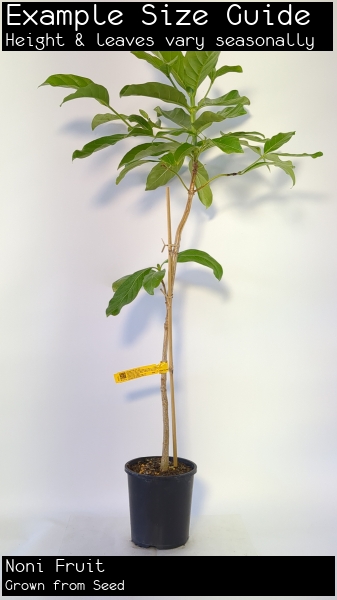
Medicinally this odd looking, pungent fruit is said to cure everything from stone-fish wounds to digestive upsets to far more serious disease. A concoction from the bark, leaves, roots and fruit can be drunk. When ripe or overripe the skin of the fruit becomes almost translucent and the flesh turns soft to develop an unpleasant odour. The odour has led to nickname of the 'starvation fruit' due to the fact that you would have to be starving to eat it as a fresh fruit. Strictly tropical climate only. Noni will flower and fruit from under one year old with care and the right micro climate. So worth trying in pots.
Buy 1+ @$49.00ea usually:$59.00ea
  Special  

Loquat - Bessell Brown

$44.00 ($44.00-$99.00 choose a size)

Large to very large fruit with large seed. Thick, orange skin resistant to bruising with firm golden coloured flesh. Pleasant mild flavour. The tree is hardy and well suited to a range of climates.
Buy 1+ @$44.00ea usually:$49.00ea

Drumstick Tree ( Moringa )

$28.90 ($19.75-$49.00 choose a size)

Also known as Horseradish tree or Tree of Life. It is considered one of the most useful trees in the world by some. In Asia, the peeled roots are used as a substitute for horseradish and the edible leaves make a highly nutritious vegetable. It produces long green pods that have been compared to a cross between peanuts and asparagus. Claims are made that its tiny leaves contains 7 times the Vit C of oranges, 4 times the Vit A of Carrots, 4 times the Calcium of milk, 3 times the Potassium of Bananas, and 2 times the protein of yogurt. The roots have also been documented as useful in many folk remedies. It originates in India and has spread in popularity to many parts of Asia, Central and South America, Africa and the Pacific. In Africa it has been also called the Miracle Tree with so many uses. This tree has delicate foliage and attractive pale yellow flowers. The slender, semi -deciduous, perennial tree, to about 10 m tall with drooping branches. Best kept pruned under 2m for ease of harvest. Thrives in subtropical and tropical climates, flowering and fruiting freely and continuously. Grows best on a dry sandy soil. Makes an ideal shade tree with high drought resistance. In temperate climates it may be beneficial to grow in pots for the first year or 2 when the tuberous root system can establish in a warmer position with sun on the pot. When larger they can be planted out, but still expect some dying back over winter as normal. Feed for best results, growers report good results from periodic fertilisation with good quality fertiliser, foliar sprays of seasol and the periodic application of Epsom salts if your soil requires. (Source: Nutritive Value of Indian Foods, by C. Gopalan) PLEASE NOTE: The foliage is delicate on young trees, and our potted plants are known for their older leaves to turn yellow and drop during transport to conserve energy. This is not a problem long term. With care and acclimatisation they will bounce backWARNING: Recent testing by the Australian Dept of Agriculture, Fisheries and Forestry to determine whether this 'novel' food (ie something that is not an ordinary part of the average Australian diet) is safe to eat, found that "Incomplete or inconclusive safety data means the risk cannot be adequately assessed and the safety of Moringa oleifera as a food cannot be confirmed." Therefore it is illegal to sell as a food or food ingredient.Daleys makes no claims to its edibility, but outlines historical, traditional uses in other parts of the world. https://www.agriculture.gov.au/biosecurity-trade/import/goods/food/notices/ifn05-26
Shop Similar

Kumquat - Calamondin

$39.00 ($39.00-$99.00 choose a size)
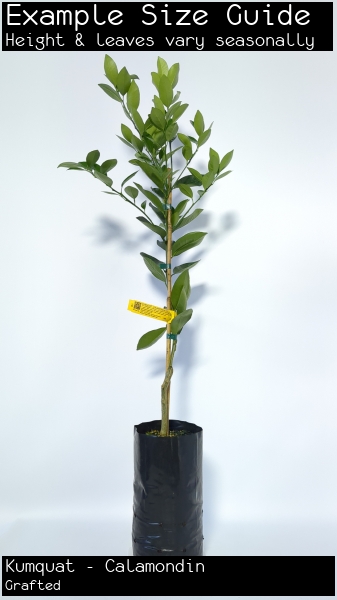
In the Philippines it is referred to a as Calamansi, where the acid pulp is used to make chutney, marmalade or as a lime substitute. Very ornamental bearing heavy crops of small round fruits.

Guioa Reviews & Tips

Star Rating

Pademelon1
★★★ 10y ago

PADDINGTON, NSW

Small, but tough. growing in a dark but damp area, this is a favorite of the insects. Any new growth is eaten quicksmart, and because of this, it has had to grow a new bole in order to grow any taller. Sadly, although it grows plenty fast, i'm not sure...


  • Subscribe
  • Postage Free Truck
  • Plant List
  • Calculate Freight