







Coopers Plains Fruit Trees (Popular)
Coopers Plains Fruit Trees and the most popular plants Australians buy for mail order. With fruit trees you should consider climate suitability.
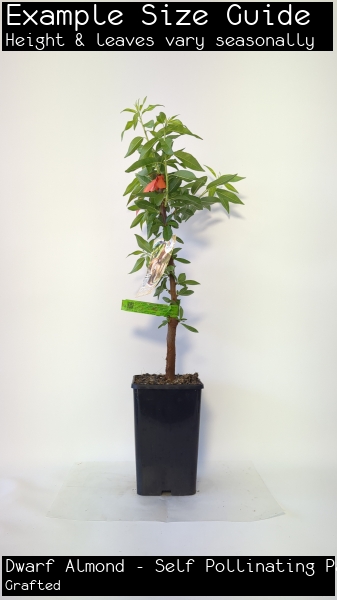
Dwarf Almond - Self Pollinating Papershell
$69.00 ($69.00-$69.00 choose a size)
A new dwarf selection of this excellent, self-pollinating almond that bears heavy crops of soft-shelled almonds with a good, sweet flavour. The kernals are broad, full and oval in shape, they are mid season. The tree has an upright form and is a self pollinating large Papershell. Almonds require a climate with dry Summer/Autumn and cool winters.

Mango - Keitt
$84.00
A Californian variety, selected for its cold tolerance. It originates from an Indian strain of mango and is thought to be a seedling selection of the Mulgoba mango. Keitt mangos turn from orange-green to bright green when ripe. Fruit are fibreless and have a lovely smooth texture, the flesh is golden orange with a delicate flavour with a hint of lemon undertones and a smooth sweetness. Late season

Dwarf Mango - Palmer
$59.00 ($59.00-$89.00 choose a size)
Promising late variety with large elongated fruit. Brightly coloured skin coloured with purple and red. The flesh is smooth and almost fibreless. Very sweet and good quality. Produces well and is fairly consistent. Semi Dwarf growing to about 1/2 the size of a Bowen Mango


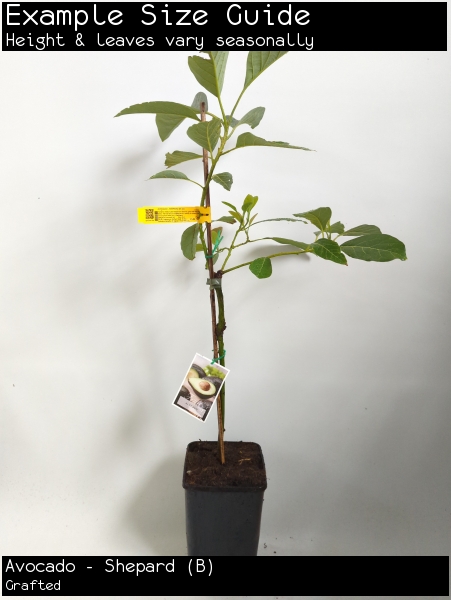
Dwarf Avocado - Shepard (B)
$54.00 ($54.00-$79.00 choose a size)
A small to medium pear-shaped fruit with thick, green skin that peels easily. The fruit has an excellent flavour, medium oil content and does not turn brown when cut. H Feb/March High yielding. It displays good resistance to frost and anthracnose. While not truly dwarf, this tree can be described as reliably smaller than others due to the spreading habit and a size of roughly 4x4 m which make it a more manageable companion in small yards.

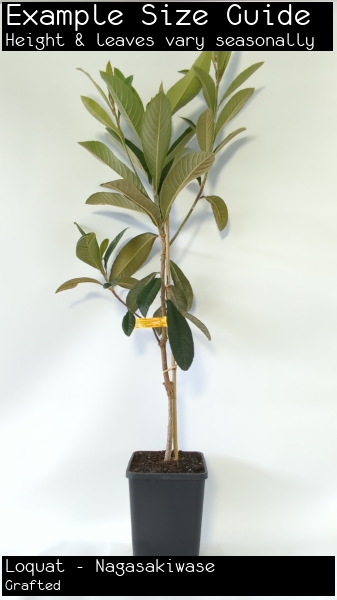
Loquat - Nagasakiwase
$59.00 ($59.00-$99.00 choose a size)
The best Japanese variety so far, it has deep orange flesh, high flesh/seed ratio and very sweet flavour. Earliest variety to ripen. Thinning fruit will enhance fruit size. The Nagasakiwase often has 2 crops a year in the subtropics. The first crop in April / May then again in August. We have found by cincturing in summer, the August crop has a much larger crop and better fruit size.