








HomegrownHeddibles1's Edible Backyard
Kiwifruit - Issai (Cutting) 7/10HomegrownHeddibles1's Edible FruitsUpdate: 6236 days 4hrs Comments: - A deciduous, hairless kiwifruit, that is self-fertile. It requires protection from strong afternoon sun, preferring morning sun, so we have it planted towards the shady side of our Avocado. It copped a scorching in the extreme heat of early 2009, which forced it to drop its first crop, and some leads withered, but after a heavy pruning in winter 2009 it is now growing vigorusly again, covered in young leaves. Hopefully this year will see its first crop survive for eating; stand by for a review of the fruit! I presume it is sourced from a cutting. Fruiting Months February and March Planted: 2007 Height 1.5 metres Growing: In the Ground Qty: 1 First Fruited: 2 Years from purchase in pot Sun/Shade: Medium Sun Water Given in: Spring SpringPollination: Self Pollination Fertiliser or Organics Used: Compost, chicken poo, blood When I Fertilise: Spring Pest Control: Extreme heat - shade in the afternoon essential in those conditions. Was this review helpful? Yes | No | Report 4 of 6 people found this review useful |
Kiwifruit - Issai (Cutting) 7/10HomegrownHeddibles1's Edible FruitsUpdate: 6236 days 4hrs Comments: - A deciduous, hairless kiwifruit, that is self-fertile. It requires protection from strong afternoon sun, preferring morning sun, so we have it planted towards the shady side of our Avocado. It copped a scorching in the extreme heat of early 2009, which forced it to drop its first crop, and some leads withered, but after a heavy pruning in winter 2009 it is now growing vigorusly again, covered in young leaves. Hopefully this year will see its first crop survive for eating; stand by for a review of the fruit! I presume it is sourced from a cutting. Fruiting Months February and March Planted: 2007 Height 1.5 metres Growing: In the Ground Qty: 1 First Fruited: 2 Years from purchase in pot Sun/Shade: Medium Sun Water Given in: Spring SpringPollination: Self Pollination Fertiliser or Organics Used: Compost, chicken poo, blood When I Fertilise: Spring Pest Control: Extreme heat - shade in the afternoon essential in those conditions. Was this review helpful? Yes | No | Report 1 of 3 people found this review useful |
Goji Berry - Shrub (Cutting) HomegrownHeddibles1's Edible Fruits HomegrownHeddibles1's Edible FruitsUpdate: 6236 days 6hrs Comments: - Acquired in early Autumn 2009, it didn't have time to do much before hitting dormancy in Winter. New shoots began appearing at the very end of August and these have grown a little in the fortnight since. Once the days are warmer and the moon is waxing again, I'll plant it out into the orchard bed. Planted: 2009 Height 25 Centimetres Growing: In a Pot Qty: 1 Sun/Shade: Medium Sun Water Given in: Spring Pruned By: 5% in Pollination: Self Pollination Fertiliser or Organics Used: Chook manure, compost, blood When I Fertilise: Spring Pest Control: No pests affecting it, touchwood! Organic Status:Organic Was this review helpful? Yes | No | Report 2 of 4 people found this review useful |
Dragon Fruit - Yellow (Cutting) 6/10 HomegrownHeddibles1's Edible Fruits HomegrownHeddibles1's Edible FruitsUpdate: 6236 days 6hrs Comments: - A very recent acquisition, in late summer 2008/2009, it quickly had to adjust to being protected from the cold of winter. Currently, it is sheltered in a basket on a wall by the back door, where it receives filtered light in the morning and late afternoon. Once the night temperatures stay above damn near freezing, it will be moved to a much sunnier, warmer wall for the rest of Spring and the Summer and Autumn, before being brought back into a protected zone for Winter. With Spring coming along nicely now (mid-September, 2009) it is showing signs of putting on growth. This variety is far more cold tolerant than it's red cousin (which I adore), but there is no point in trying to teach it to love frost. The stem is fleshy, a little prickly and roughly triangular with crests. It can be propagated by cuttings, which like most succulents have to be left to dry and form a callous before they can be planted out. If it likes the conditions here, I look forward to our own dragon fruit in the next year or two. Planted: 2009 Height 25 Centimetres Growing: In a Pot Qty: 1 Sun/Shade: Medium Sun Water Given in: Winter Pollination: Self Pollination Fertiliser or Organics Used: Sulphate of potash When I Fertilise: Spring Pest Control: Frost Organic Status:Organic Was this review helpful? Yes | No | Report 6 of 8 people found this review useful |
Olive - Manzanillo (Grafted) 7/10 HomegrownHeddibles1's Edible Fruits HomegrownHeddibles1's Edible FruitsUpdate: 6236 days 6hrs Comments: - No flowers yet, but still early days for an olive. Easy to maintain, it has a lovely upright habit which has naturally formed a vase-shape. It grows moderately each year, approximately a foot or so each Spring and Summer, and it copes with all the vagaries of wind, sun, cold, heat, drought & wet that it faces in its pot by the citrus tree bed. When we've set up the 3rd orchard bed, it will be planted out to provide some protection to the house from the afternoon summer sun. The fruit can be harvested when green or black (I prefer black olives), and are better suited to pickling and eating that oil production. If we have the space for a second olive tree, I will get one that is better for oil production, so we can have the best of both worlds. Height 1.5 metres Growing: In a Pot Qty: 1 Sun/Shade: Full Sun Water Given in: Winter Pruned By: 5% in Pollination: Self Pollination Fertiliser or Organics Used: Chook manure, compost, blood When I Fertilise: Spring Pest Control: No pests, yee-hah! Organic Status:Organic Was this review helpful? Yes | No | Report 5 of 6 people found this review useful |
Pear - WilliamsHomegrownHeddibles1's Edible FruitsUpdate: 6236 days 6hrs Comments: - See Pear, Beurre Bosc, above, with which it is double-grafted. Planted: 2007 Height 2.5 metres Growing: In the Ground Qty: 1 Sun/Shade: Full Sun Water Given in: Spring Pruned By: 20% in Spring Pollination: Cross Pollination Cross Pollinator Variety: Beurre Bosc Fertiliser or Organics Used: Chook manure, compost, blood When I Fertilise: Spring Organic Status:Organic Was this review helpful? Yes | No | Report 0 of 1 people found this review useful |
Pear - Beurre Bosc (Grafted)HomegrownHeddibles1's Edible FruitsUpdate: 6236 days 6hrs Comments: - Double-grafted with a Williams pear. They haven't flowered up till now, but the fruit spurs have developed nicely and they should be flowering this Spring. Easy to care for, provided you keep the pear and cherry slug at bay [see pest Control, below]. Planted: 207 Height 2.5 metres Growing: In the Ground Qty: 1 Sun/Shade: Full Sun Water Given in: Spring Pruned By: 20% in Spring Pollination: Cross Pollination Cross Pollinator Variety: Williams Fertiliser or Organics Used: Chook manure, compost, blood When I Fertilise: Spring Pest Control: Pear and cherry slug - as per Stella Cherry - pyrethrum spray and squashing when larvae noticed, and it was sprayed with lime sulphur this winter (2009) to try to cut them off at the pass. Organic Status:Organic Was this review helpful? Yes | No | Report 1 of 1 people found this review useful |
Apple - Jonathan (Grafted) 10/10HomegrownHeddibles1's Edible FruitsUpdate: 6236 days 6hrs Comments: - Similar in habit to the Granny Smith, above, it too is kept to about 2.5m in height for manageable harvesting and netting. Like the Granny Smith it is very hardy, prolific and vigorous. It produces red, cream and green flecked and striped fruit which is very sweet and crisp. Lovely for lunchboxes and desserts. Fruiting Months February, March, April Planted: 2007 Height 2.5 metres Growing: In the Ground Qty: 1 Fruit Harvest: 4 kilograms per Year First Fruited: 2 Years from purchase in pot Sun/Shade: Full Sun Water Given in: Autumn and Spring Pruned By: 20% in Spring Pollination: Cross Pollination Cross Pollinator Variety: Granny Smith, Ballerina Waltz Fertiliser or Organics Used: Chook manure, compost, blood When I Fertilise: Spring Pest Control: Not troubled by pests, thankfully. Kept netted to keep the birds from the fruit, but o/w does not require any special treatment. Organic Status:Organic Was this review helpful? Yes | No | Report |
Dwarf Apple - Granny Smith (Grafted) 10/10 HomegrownHeddibles1's Edible Fruits HomegrownHeddibles1's Edible FruitsUpdate: 6236 days 7hrs Comments: - Kept to 2.5 metres high by summer & winter pruning, if it is a dwarf it's the tallest in the world! A lovely, hardy, prolific tree, it produced a fabulous crop two years after it was planted. It grows vigorously in Spring and Summer, so we keep it pruned to a manageable 2 metres or so to enable us to reach the fruit and haul the netting over it. The apples, bred in Australia in the 1800s, are perfect for cooking (they make the very best apple pies, apple sauce, jams and jellies), baking, treating diarrhoea (grate the fruit, skin and all and eat it - the pectin sets both jam and poo!) or eating fresh. Tart and sweet at the same time they are very refreshing and make the mouth tingle with pleasure. Fruiting Months February, March, April Planted: 2007 Height 2.5 metres Qty: 1 Fruit Harvest: 4 kilograms per Year First Fruited: 2 Years from purchase in pot Sun/Shade: Full Sun Water Given in: Autumn and Spring Pruned By: 20% in Pollination: Cross Pollination Cross Pollinator Variety: Ballerina Waltz, Jonathan Fertiliser or Organics Used: Chook manure, compost, blood When I Fertilise: Spring Pest Control: No pests noted so far, touchwood. Organic Status:Organic Was this review helpful? Yes | No | Report 25 of 27 people found this review useful |
Apple Ballerina Waltz (Grafted) 10/10HomegrownHeddibles1's Edible FruitsUpdate: 6236 days 7hrs Comments: - I bought this lovely tree in a small pot back in 2002 or
thereabouts, but it didn't get enough sun to prompt sufficient growth,
flowering or fruit set for at least two years. When I moved to a much larger and fully sunny block in 2004, it got a new lease on life and put on some growth and finally flowered. No fruit set, but at least it was much happier. Once we planted it into the orchard bed we set up in 2007, it took off.
It flowered well in 2007 and managed to provide about half a dozen
apples. It produced a fabulous crop in 2008/2009, more than 20,
remarkable for its small size. It is only 1.5m high and about 40cm
wide, but it is covered with fruit spurs. Now that Spring (2009) is under way, it is once again showing signs
of flowering prolifically and should provide a substantial crop. The apples can be eaten green or cooked, as per a Granny Smith, or
if you can wait till the apples have red and white flecked/striped
colour, it is sweeter, like a Jonathan. No pruning required at all. Fruiting Months February, March, April Planted: 2007 Height 1.5 metres Growing: In the Ground Qty: 1 Fruit Harvest: 4 kilograms per Year First Fruited: 5 Years from purchase in pot Sun/Shade: Full Sun Water Given in: Autumn and Spring Pollination: Cross Pollination Cross Pollinator Variety: Granny Smith, Jonathan Fertiliser or Organics Used: Chook manure, compost, blood When I Fertilise: Yearly Pest Control: None required, touch wood. Organic Status:Organic Was this review helpful? Yes | No | Report 1 of 1 people found this review useful |
Nashi Pear - Nijisseiki (Grafted) 6/10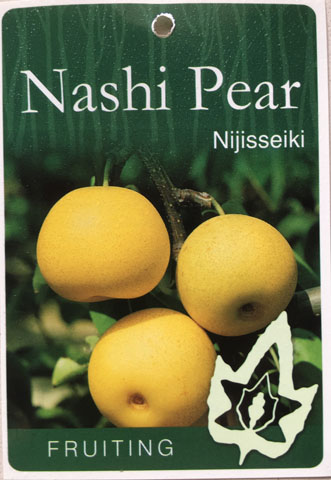 HomegrownHeddibles1's Edible Fruits HomegrownHeddibles1's Edible FruitsUpdate: 6236 days 7hrs Comments: - Lots of growth, with a lovely white-spotted dark brown trunk and large pendulous leaves. No flowers yet, but plenty of spurs now present and signs that it might flower this year (2009). Planted: 2007 Height 2.5 metres Growing: In the Ground Qty: 1 Sun/Shade: Full Sun Water Given in: Spring Pruned By: 20% in Spring Pollination: Self Pollination Fertiliser or Organics Used: Chook manure, compost, blood When I Fertilise: Yearly Pest Control: Pear and cherry slug - as per Stella Cherry - pyrethrum spray and squashing when larvae noticed, and it was sprayed with lime sulphur this winter (2009) to try to cut them off at the pass. Organic Status:Organic Was this review helpful? Yes | No | Report 7 of 9 people found this review useful |
Cherry - Stella (Grafted) 1/10 HomegrownHeddibles1's Edible Fruits HomegrownHeddibles1's Edible FruitsUpdate: 6236 days 8hrs Comments: - This has been the odd one out in the orchard bed, not yet having produced any fruit, hardly flowering and not putting out much growth except atthe tope (where we don't want it), so it has very few branches. It is pruned each winter, fed, watered, receives the same high levels of cold in winter and sun as all the other (successful) deciduous and evergreen trees, but is the only one to be a dud. If the damn thing doesn't produce the goods this year it will be pulled out and replaced. Height 1.5 metres Growing: In the Ground Qty: 1 Sun/Shade: Full Sun Water Given in: Spring Pruned By: 20% in Spring Pollination: Self Pollination Fertiliser or Organics Used: Chook manure, compost, blood When I Fertilise: Yearly Pest Control: Pear and cherry slug - sprayed with pyrethrum each fortnight when larvae are noticed, and the good old squash technique is also employed. Sprayed with lime sulphur this (2009) winter to try to deter them reaching the leaves this year. Organic Status:Organic Question: Any suggestions on why the damn thing isn't growing vigorously lower down, and how I can remedy this? Was this review helpful? Yes | No | Report 0 of 1 people found this review useful |
Chilean Guava (Cutting) 8/10HomegrownHeddibles1's Edible FruitsUpdate: 6236 days 8hrs Comments: - A tiny shrub with very small leaves and an upright habit, it produces the tiniest berries imaginable - about 5mm across - but they are packed full of flavour. A bit like an alpine strawberry crossed with a feijoa (pineapple guava), both tart and sweet and distinctly fruity. These plants make an ideal mini hedge for an edible border in an orchard, vegie patch or flower bed, and can be grown in pots, too. I've begun experimenting with taking cuttings for a cheap propagation process. Very drought tolerant, very productive and very hardy as well. Fruiting Months March, April, May Planted: 2007 Height 0.5 metres Growing: In the Ground Qty: 1 First Fruited: 2 Years from purchase in pot Sun/Shade: Medium Sun Water Given in: Winter Pruned By: 5% in Autumn and Winter Pollination: Self Pollination Fertiliser or Organics Used: Chook manure, compost, blood When I Fertilise: Yearly Pest Control: None detected. Organic Status:Organic Was this review helpful? Yes | No | Report 4 of 6 people found this review useful |

Blueberry Denise 5/10HomegrownHeddibles1's Edible FruitsUpdate: 6236 days 8hrs Comments: - One of two that we planted - the other was Brigitte, but the latter carked it, unfortunately. It struggles due to the slight alkalinity of the orchard bed, but I feed it azalea food, some weak vinegar-water solution and sulphate of ammonia at different times of the year to improve its living conditions. The flowers are a delicate pink-white, very pretty. The leaves turn gorgeous golds and reds in autumn, and they are a lovely soft green in spring and summer. The stems are a russet colour. A very attractive plant. It needs a lot of water, which we can't always supply due to the bloody drought and the water restrictions, but it is shaded from the worst of the summer sun by the deciduous trees in the bed. Once I've got a few more things in the garden sorted out, I will obtain more blueberry plants. Our cool to cold winters mean we can grow the high- and moderate-chill varieties, which tend to be sweeter. Fruiting Months November and December Planted: 2007 Height 0.5 metres Growing: In the Ground Qty: 1 Sun/Shade: Medium Sun Water Given in: Spring Pruned By: 2% in Spring Pollination: Self Pollination Fertiliser or Organics Used: Blood When I Fertilise: Spring Pest Control: None, except for alkaline soil tendencies. Organic Status:Organic Was this review helpful? Yes | No | Report 2 of 4 people found this review useful |
Feijoa (Grafted) HomegrownHeddibles1's Edible Fruits HomegrownHeddibles1's Edible FruitsUpdate: 6236 days 8hrs Comments: - Variety not known, but the typical one most gardens have in the area. Just one fruit was produced in Autumn 2009, and it was delicious. Very drought tolerant, it has an upright columnar habit with leaves that grow vertically, turning their silvery undersides towards the strongest light to protect itself. The flowers are gorgeous, something like a passionfruit crossed with a fushia, red and cream in colour. We're keeping it at about 2 m high, but they can get to 6 m or so if you let them go. The fruit is ripe when it drops from the tree. The birds haven't discovered the joys of them, thankfully, but the tree is netted anyway. I'm looking forward to a much bigger harvest this coming autumn. Fruiting Months March and April Planted: 2007 Height 2 metres Qty: 1 First Fruited: 2 Years from purchase in pot Sun/Shade: Full Sun Water Given in: Autumn and Spring Pruned By: 2% in Pollination: Self Pollination Fertiliser or Organics Used: Blood When I Fertilise: Yearly Pest Control: None required Organic Status:Organic Was this review helpful? Yes | No | Report 17 of 21 people found this review useful |
Fig Black Genoa (Grafted) 8/10 HomegrownHeddibles1's Edible Fruits HomegrownHeddibles1's Edible FruitsUpdate: 6236 days 8hrs Comments: - This tree was the last of our deciduous trees to be planted and the first to produce a crop, taking only one year to come up with some very delicious, sweet and beautiful fruit. A dark brown skin with pink pulp which is very attractive on a platter with some cheese and raisins. Yum!! Curiously, the fruit ripen only one or two at a time, so we can't have a good feed of figs for ourselves and any visitors at the same time. [Sorry, visitors!]. I'd like a second fig, but we don't yet have the room for one. The site of the intended third orchard bed requires a lot of re-development (and money, sigh...) before we can get that started. Either another Black Genoa or a Brown Turkey will suit us well. Fruiting Months January, February, December Planted: 2007 Height 2 metres Growing: In the Ground Qty: 1 Fruit Harvest: 2 kilograms per Year First Fruited: 2 Years from purchase in pot Sun/Shade: Full Sun Water Given in: Autumn and Spring Pruned By: 20% in Autumn, Winter, Spring Pollination: Self Pollination Fertiliser or Organics Used: Blood When I Fertilise: Spring Pest Control: No pests noted, except for birds which attack the fruit, so netting is essential. Organic Status:Organic Was this review helpful? Yes | No | Report 15 of 18 people found this review useful |
Lemon - Meyer (Grafted) 5/10 HomegrownHeddibles1's Edible Fruits HomegrownHeddibles1's Edible FruitsUpdate: 6236 days 8hrs Comments: - Our poor lemon tree is suffering; the second one that we've had. The first one drowned due to planting in too heavy a soil prior to setting up the raised orchard bed. This one grew too well and I didn't notice that the roots were becoming exposed due to the soil sinking as the tree grew. Consequently, the uppermost roots were exposed to the cold and the tree is suffering. Its leaves are yellowing and dropping and it hasn't flowered this winter. I've covered the roots with more compost and given it a bit of a hair cut, plus some boron and Seasol to promote root growth. Hopefully as the weather warms up it will pick up and return to good health. If the worst happens, it will have to come out and be replaced. I might try a Lemonade, for the juice and a Lots'a'Lemons in a pot rather than another Meyer in the ground if need be. Fruiting Months October and November Planted: 2007 Height 1 metres Growing: In the Ground Qty: 1 First Fruited: 2008 Years from purchase in pot Sun/Shade: Full Sun Water Given in: Spring Pruned By: 2% in Pollination: Self Pollination Fertiliser or Organics Used: Citrus food, chelated iron, chook poo When I Fertilise: Winter Pest Control: None required - no citrus gall wasp or scale ever noticed, touchwood. Organic Status:Organic Was this review helpful? Yes | No | Report 2 of 2 people found this review useful |
Grapefruit (Grafted)HomegrownHeddibles1's Edible FruitsUpdate: 6236 days 9hrs Comments: - Ruby Ray variety with pink flesh, suited to coolish climates. Like most citrus trees, it suffers in the cold and wind in Victoria,
but comes good again in the heat of summer and with the aid of
fertilisers and tonics. Seasol and Powerfeed in Spring through to Autumn are important to build up the cell walls so it can better cope with the cold. A dose of Citrus food pellets in February and August, as well as some chelated iron and Epsom Salts (Magnesium sulphate) corrects the winter yellows. Chook poo and human yellow fertiliser (!!) once the leaf colour is back to normal in late spring or early summer makes all the difference. It has tried to fruit a couple of
times at least but the foul stinking heat of the 2008/2009 summer, the
water restrictions and the hot winds forced it to drop all but one of the fruit that
formed. That poor solitary grapefruit is developing nicely now. I can't wait to eat my very own pink grapefruit! Planted: 2007 Height 1 metres Growing: In the Ground Qty: 1 First Fruited: 2 Years from purchase in pot Sun/Shade: Full Sun Water Given in: Autumn and Spring Pruned By: 2% in Autumn and Winter Pollination: Self Pollination Fertiliser or Organics Used: Citrus food, chelated iron, chook poo When I Fertilise: Winter Pest Control: No pests affecting it yet, touchwood! Organic Status:Organic Was this review helpful? Yes | No | Report 4 of 8 people found this review useful |
Lime - Kaffir (Grafted) 5/10 HomegrownHeddibles1's Edible Fruits HomegrownHeddibles1's Edible FruitsUpdate: 6236 days 9hrs Comments: - It took a while to get going in our rather cool to cold climate and the terrible winds we've experienced in the last couple of years, but it held up very well in the record temperatures of January 2009. It will be providing us with beautifully scented leaves for cooking this year. Little pruning is required, except to occasionally tidy up some leggy growth or re-direct the occasional wayward branch. Planted: 2007 Height 1 metres Growing: In the Ground Qty: 1 Sun/Shade: Full Sun Water Given in: Spring Pruned By: 2% in Pollination: Self Pollination Fertiliser or Organics Used: Citrus food, chelated iron, chook poo When I Fertilise: Winter Pest Control: No pests affecting it, touchwood! Like all of our citrus, it is checked for citrus gall wasp, scale etc but none are bothering it to date. Organic Status:Organic Was this review helpful? Yes | No | Report |
Mandarin - Imperial 5/10 HomegrownHeddibles1's Edible Fruits HomegrownHeddibles1's Edible FruitsUpdate: 6236 days 9hrs Comments: - Prone to leaf curling and yellowing in winter due to the cold, but picks
up again in spring and summer. Very healthy. Requires next to no
pruning, except for removal of the occasional browned off twig. It hasn't fruited yet, but it has tried to. I live in hope that this year it will come to the party. Planted: 2007 Height 2 metres Growing: In the Ground Qty: 1 Sun/Shade: Full Shade Water Given in: Spring Pruned By: 2% in Autumn and Winter Pollination: Self Pollination Fertiliser or Organics Used: Citrus food, chelated iron, chook poo When I Fertilise: Winter and Spring Pest Control: No pests affecting it, touchwood! Organic Status:Organic Was this review helpful? Yes | No | Report 11 of 15 people found this review useful |
Tahitian LimeHomegrownHeddibles1's Edible FruitsUpdate: 6263 days 24hrs Comments: - The poor thing struggled in its first couple of years, but is coming along very well now. No sign of flowers in the previous years, but it has been setting itself up and will hopefully fruit this year, 2009/2010. Most
of our winds come from the North - hot in summer and cold in winter -
and if I build up some shelter then it will never get any sun. I'm
thinking some light shadecloth might be the answer as a windbreak. Planted: 2007 Height 1 metres Growing: In the Ground Qty: 1 Sun/Shade: Full Sun Water Given in: Winter Pruned By: 2% in Pollination: Self Pollination Fertiliser or Organics Used: Citrus food, chelated iron, chook poo, When I Fertilise: Yearly and Winter Pest Control: No pests annoying it, thankfully. Organic Status:Organic Was this review helpful? Yes | No | Report 1 of 1 people found this review useful |
Apricot - Moorpark 8/10 HomegrownHeddibles1's Edible Fruits HomegrownHeddibles1's Edible FruitsUpdate: 6264 days 0hrs Comments: - This variety dates from the late 1600s or earlier. Said to be Jane Austen's favourite, but were there many competitors back then?!!? Fruiting Months January and February Planted: 2007 Height 2 metres Growing: In the Ground Qty: 1 First Fruited: 2 Years from purchase in pot Sun/Shade: Full Sun Pruned By: 10% in Summer and Spring Pollination: Self Pollination When I Fertilise: Spring Pest Control: No pests affecting it (touchwood), other than drought, high winds and fierce summer heat over 2008/2009 which ruined a lot of the fruit, damn it! Organic Status:Organic Question: Purchased bare-rooted (this option not available, as per above "First Fruited" list) Extremely productive. Fruit needs to be thinned to improve quality of remainder. Fruit tough on the outside but spongy and very sweet and moist on the inside - extremes of heat and bloody water restrictions probably to blame for its first crop being that way. Better luck in 2009/2010, I hope. Was this review helpful? Yes | No | Report 18 of 25 people found this review useful |