






Digby Fruit Trees (Popular)
Digby Fruit Trees and the most popular plants Australians buy for mail order. With fruit trees you should consider climate suitability.
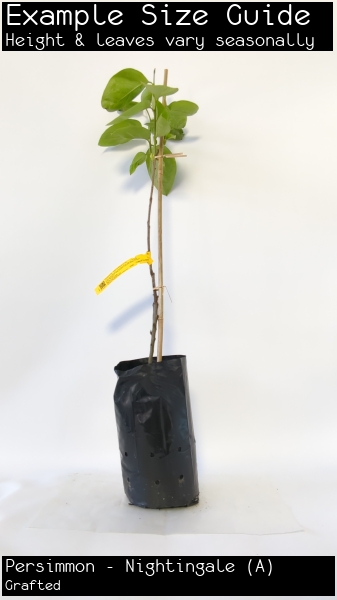
Persimmon - Nightingale (A)
$79.00 ($69.00-$79.00 choose a size)
A deep-orange flesh that is very sweet and juicy when ripe. A conical large shape. Very high quality flesh that is most often seedless. Compact growing. Astringent
Plum - Satsuma
$74.00 ($49.00-$74.00 choose a size)
Red to purple flesh with a freestone. The flavour is good, the growth vigorous and its bears particularly well, in fact to get large fruits it may require thinning. The firm, juicy flesh has a sweet spicy flavour. 350 - 400 hours chill. Bears November to early December.

Kumquat - Meiwa
$46.95 ($46.95-$99.00 choose a size)
A round, brightly coloured, sweet citrus fruit that can be eaten straight from the tree. Both the skin and the flesh are very sweet and low in seed. Semi dormant in winter lending it cold hardiness.Hybrid of Nagami and Marumi, to which it is most similar. A naturally small tree.

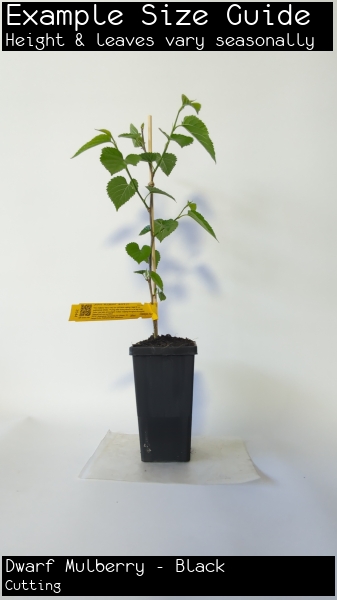
Dwarf Mulberry - Black
$34.00 ($19.75-$79.00 choose a size)
This mulberry has a very low chill factor making it ideal for our subtropical climate. Pruning after fruiting allows it to be kept under 3mtrs, and also encourages multiply cropping throughout the summer. It is best to pick the fruit when ripe, as it doesn't ripen further off the tree. A benefit of a mulberry tree is that the fruit ripens over an extended period of time unlike other fruit that often ripens all at once. The fruits of the black mulberry, considered the tastiest and most versatile of the mulberries are large and juicy with a good balance of sweetness and tartness. The fruit of the dwarf black mulberry is the same as that on the large black mulberry that we all know and love. The fruit is large, resembling a blackberry, sweet and luscious. When not devoured fresh it is ideal to use in jams, wines and mulberry pies. (Dwarf Mulberry Tree Video )This variety performs excellent in the Subtropics. There has been feedback that this variety doesn't perform as well in Temperate Climates.



Drumstick Tree ( Moringa )
$28.90 ($19.75-$49.00 choose a size)
Also known as Horseradish tree or Tree of Life. It is considered one of the most useful trees in the world by some. In Asia, the peeled roots are used as a substitute for horseradish and the edible leaves make a highly nutritious vegetable. It produces long green pods that have been compared to a cross between peanuts and asparagus. Claims are made that its tiny leaves contains 7 times the Vit C of oranges, 4 times the Vit A of Carrots, 4 times the Calcium of milk, 3 times the Potassium of Bananas, and 2 times the protein of yogurt. The roots have also been documented as useful in many folk remedies. It originates in India and has spread in popularity to many parts of Asia, Central and South America, Africa and the Pacific. In Africa it has been also called the Miracle Tree with so many uses. This tree has delicate foliage and attractive pale yellow flowers. The slender, semi -deciduous, perennial tree, to about 10 m tall with drooping branches. Best kept pruned under 2m for ease of harvest. Thrives in subtropical and tropical climates, flowering and fruiting freely and continuously. Grows best on a dry sandy soil. Makes an ideal shade tree with high drought resistance. In temperate climates it may be beneficial to grow in pots for the first year or 2 when the tuberous root system can establish in a warmer position with sun on the pot. When larger they can be planted out, but still expect some dying back over winter as normal. Feed for best results, growers report good results from periodic fertilisation with good quality fertiliser, foliar sprays of seasol and the periodic application of Epsom salts if your soil requires. (Source: Nutritive Value of Indian Foods, by C. Gopalan) PLEASE NOTE: The foliage is delicate on young trees, and our potted plants are known for their older leaves to turn yellow and drop during transport to conserve energy. This is not a problem long term. With care and acclimatisation they will bounce backWARNING: Recent testing by the Australian Dept of Agriculture, Fisheries and Forestry to determine whether this 'novel' food (ie something that is not an ordinary part of the average Australian diet) is safe to eat, found that "Incomplete or inconclusive safety data means the risk cannot be adequately assessed and the safety of Moringa oleifera as a food cannot be confirmed." Therefore it is illegal to sell as a food or food ingredient.Daleys makes no claims to its edibility, but outlines historical, traditional uses in other parts of the world. https://www.agriculture.gov.au/biosecurity-trade/import/goods/food/notices/ifn05-26


pin_drop