





Taro Tubers

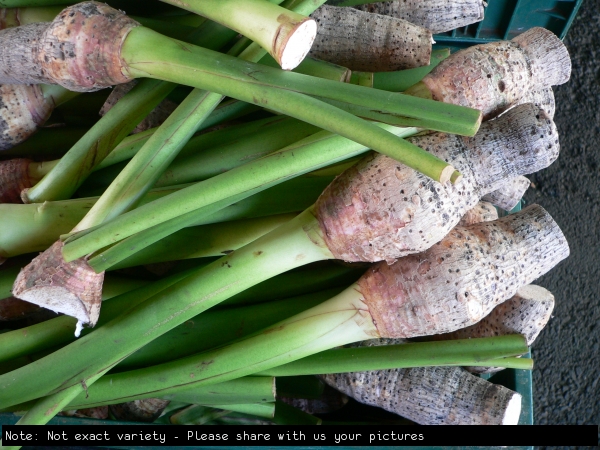
(1/3) Taro Tubers By David Monniaux [GFDL, CC-BY-SA-3.0, CC BY-SA 2.0 fr] (Photo Credits)

Leaf of the Taro Pacific

(2/3) Leaf of the Taro Pacific

Taro Pacific For Sale

(3/3) Taro Pacific For Sale

fullscreen1

Taro Pacific

Colocasia esculenta
A large tuber, sometimes reaching up to 3-4 kg. Taro a staple crops of the Pacific. The delicious tuber can substitute potato in almost any dish. Its heart-shaped leaves make for an attractive ornamental plant that grows well in both shade and sun. Prefer... Read More

$17.90

Specifications of Taro Pacific

Preferred Climate Tropical, SubtropicalLearn About Climate Zones

Grown From RhizomeLearn About Propagation Methods

Max Height (when in the ground with good conditions) 1-2m

Plants required to Pollinate 1 (Self Pollinating)Learn about Pollination

Can it Handle Frosts? Sometimes

Amount of leaves in Winter? All Leaves (Evergreen)

Quarantine Restrictions to these Areas WA

Suitability in Pots Yes

Water Requirements Frequent Watering

Is it a Dwarf Fruit Tree? Can be pruned to 2m

Time to Fruit/Flower/Harvest 2-3 Years

Sun or Shade Full (Sun:80%-100%), Part (Sun:50-80%)

Preferred Soil Type Poor Drainage (Clay)

Soil pH Neutral (6.6-7.3pH)

Fruiting/Harvest Months July, August, September

End of Season Tubers - Yellowing In Autumn

Create a Filter to find similar plants

Perennial Vegetables
Create Filter filter_vintage

Customers also bought

These plants are often purchased together. Also check plant information for suitability in your orchard.

Taro Japanese

$17.90 ($17.90-$18.75 choose a size)

A staple crop throughout Asia and the Pacific. The delicious small tuber can substitute potato in almost any dish. Its heart-shaped leaves make for an attractive plant that grows well in shade and sun. Prefers moist soil.Taro should never be eaten raw, due to the presence of harmful oxalates, which are eliminated with cooking. These substances are particularly high in the leaves. Weed Warning: in tropical areas, Taro can spread overtime especially in waterways, displacing native vegetation. Plant responsibly
  Special  

Jujube - Honey Jar

$109.00 ($109.00-$119.00 choose a size)
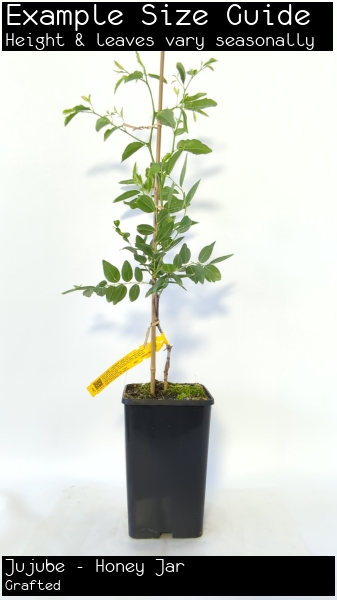
Sweet and crunchy when fresh, the Honey Jar has a classic jujube flavour & crispness with a blue gum honey flavour. This smaller, round jujube fruit is said to develop a unique caramel apple flavour as it dries. The variety is a heavy producer and harvest can be extended with multiple pickings. Early season.
Buy 1+ @$109.00ea usually:$124.90ea
  Special  

Jujube - Sugar Cane

$109.00 ($109.00-$119.00 choose a size)

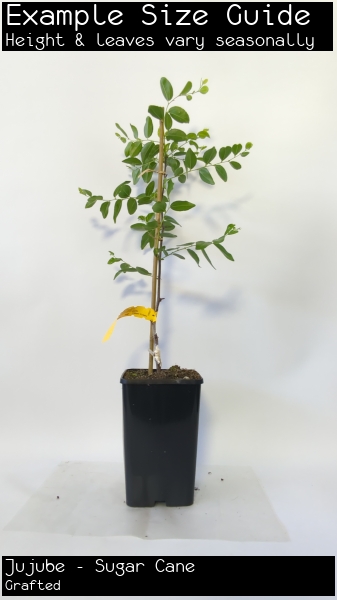
Early season harvest of small to medium, round to elongated fruit. Extremely sweet fruit with crisp texute, and good resistance to splitting. The tree is very vigorous, but unfortunately it can be thorny. Jujubes are well suited to the hot dry conditions of inland Australia
Buy 1+ @$109.00ea usually:$124.00ea
  Special  

Jujube - Chico

$114.00 ($109.00-$139.00 choose a size)

Compact and bushy, perfect for pots with round fruit flattened on the bottom. Look similar to a small apple. Pick when the whole fruit (or at least 80%) has just turned brownish red. Texture is crisp and light we consider it an excellent fresh or dried variety. Fruit size 35-45mm. Developed at the Chico institute in California, this is an early fruiting variety. (Jan - March) Cross pollinate for best results.
Buy 1+ @$114.00ea usually:$124.00ea
  Special  

Papaya - Red Army

$29.00 ($3.90-$29.00 choose a size)

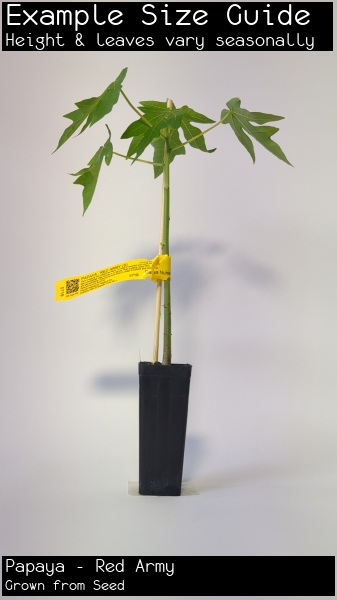
Early cropping with vibrant red flesh. To keep it dwarfed you must cut it back immediately after fruiting or in Spring. High yielding, tasty fruit, and self pollinating. Precocious and fruits in under 6 months and under 1m tall. Enrich free draining soil with compost in a warm protected position for best results. Resistant to Papaya Ring Spot Virus.
Click Choose above to view Specials
  Special  

Pandanus - Edible

$37.00 ($24.90-$59.00 choose a size)

Widely cultivated for use in Asian cooking and basket making. It has a nutty fragrance and is most commonly used in rice dishes or tied in a bundle and cooked with food. Also useful in flower arrangements. A low growing plant to 1m with long narrow blade like leaves and woody aerial roots. In tropical climates it can be grown as a marginal plant in dams and ponds, used as a bedding plant in tropical landscaping. Outside of the tropics, well worth trying as indoor plant in winter with a warm, sunny aspect. Allow the plant to dry out over the winter months, but maintain humidity
Click Choose above to view Specials

Taro Pacific Reviews & Tips

Star Rating

Margaret
★★★★★ 1y ago

TEWANTIN, QLD

Taro Pacific

Very healthy plants I managed to plant another 3 x plants and now I have 7 plants. I cut some of the leaves and gave to my aunty at Gold Coast she cooked taro leaves with coconut cream. Yummy dinner

Karolyn
★★★★★ 2y ago

PACIFIC PINES, QLD

Taro Pacific

They are going strong and healthy

Kate
★★★★★ 2y ago

BUDGEWOI, NSW

Taro Pacific

easy to grow, nutritious and delicious!

Jim Beaton
20y ago

Childers, QLD, Australia

Taro Pacific

To keep your rootstock through the Winter, in May re-plant into Styrene Boxes with plenty of mulch, plant out again in Sept into position. They will be months more advanced for cropping and have minimul losses. Leaves for Lu are also available all year.


  • Subscribe
  • Postage Free Truck
  • Plant List
  • Calculate Freight