








Colac West Fruit Trees (Popular)
Colac West Fruit Trees and the most popular plants Australians buy for mail order. With fruit trees you should consider climate suitability.
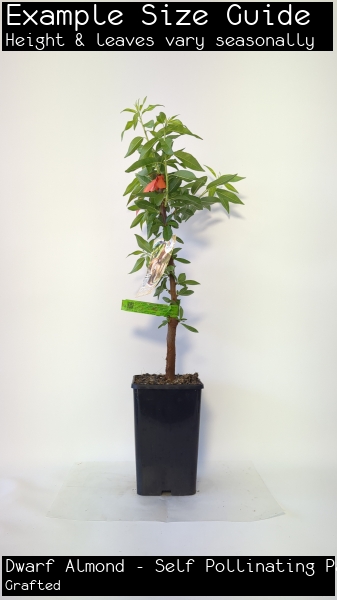
Dwarf Almond - Self Pollinating Papershell
$69.00 ($69.00-$69.00 choose a size)
A new dwarf selection of this excellent, self-pollinating almond that bears heavy crops of soft-shelled almonds with a good, sweet flavour. The kernals are broad, full and oval in shape, they are mid season. The tree has an upright form and is a self pollinating large Papershell. Almonds require a climate with dry Summer/Autumn and cool winters.

Cherry - Morello
$44.00 ($44.00-$49.00 choose a size)
Sour cherry producing abundant crops of fruit on a tree generally smaller than sweet cherry trees. Self pollinating and can provide pollination services to other late flowering varieties. Harvest is in late Summer, early Autumn. Great for preserves, liqueurs and cooking both savoury and sweet dishes.

Bilimbi
$34.00 ($29.00-$79.00 choose a size)
The fruit is crisp when unripe, turns from bright green to yellow-green, ivory or nearly white when ripe and falls to the ground. The skin is glossy, thin, soft and tender, and the green flesh is jelly-like, juicy and extremely acid. They are sometimes faintly five-angled with an acid pulp. The bilimbi is a close relative to the carambola however it is quite different in its appearance, manner of fruiting and uses. Originating and grown extensively in Indonesia it is also cultivated and semi-wild everywhere in the Philippines and is very common in , Ceylon, Burma, Thailand, Malaya and Singapore. The mature fruits have a crunchy watery flesh and resemble small cucumbers. They usually range from 5 to 8cm in length. The fruits are picked by hand, singly or in clusters. They need gentle handling because of the thin skin and cannot be kept for more than 4 to 5 days. The fruit is generally regarded as too acid for eating raw, but in Costa Rica, the green, uncooked fruits are prepared as a relish that is served with rice and beans. Sometimes it is an accompaniment for fish and meat. Ripe fruits are frequently added to curries in the Far East. Bilimbi is often used in place of mango to make chutney. To reduce acidity, it may be first pricked and soaked in water overnight, or soaked in salted water for a shorter time; then boiled with sugar to make a delicious jam. Half-ripe fruits are salted, set out in the sun, and pickled in brine. An attractive and medium sized tree the bilimbi displays attractive dark-red flowers that are produced in panicles from the trunk and older branches. A tropical species the bilimbi is more cold sensitive than the carambola especially when very young. It will be a challenge trying to grow outside the Tropics. It does best in rich, moist, but well-drained soil, it grows and fruits quite well on sand or limestone. No pests or diseases have been reported specifically for the bilimbi.

pin_drop
This Postcode: 3250
place Colac Fruit Trees place Elliminyt Fruit Trees place Colac West Fruit Trees place Colac East Fruit Treespin_drop