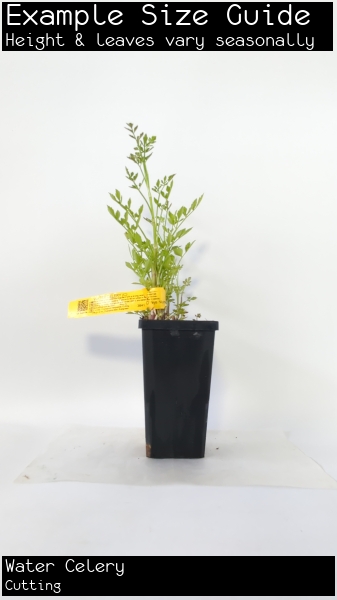







Water celery Oenanthe javanica

(1/3) Water celery Oenanthe javanica By KENPEI (KENPEI's photo) [GFDL, CC-BY-SA-3.0, CC BY-SA 2.1 jp] (Photo Credits)

Leaf of the Water Celery

(2/3) Leaf of the Water Celery

Water Celery For Sale

(3/3) Water Celery For Sale

fullscreen1

Water Celery

Oenanthe javanica
Water Celery is a perennial bog plant with a strong celery flavour that becomes milder with cooking. It grows to 60 cm when in flower in most areas of Australia. The leaves and tender stems are eaten raw in salads, used in soups, or to flavour rice; the w... Read More

$17.90

Shop Similar

event_busy When will it be in Stock?

We previously had the most to buy in Nov and Dec. They are unlikely to be available in Feb and Mar. Remember to click above to get notified when it is available once more.

Specifications of Water Celery

Preferred Climate Subtropical, Warm TemperateLearn About Climate Zones

Grown From CuttingLearn About Propagation Methods

Max Height (when in the ground with good conditions) 0-1m

Plants required to Pollinate 1 (Self Pollinating)Learn about Pollination

Can it Handle Frosts? Yes

Amount of leaves in Winter? All Leaves (Evergreen)

Quarantine Restrictions to these Areas WA

Create a Filter to find similar plants

Perennial Leafy Greens
Create Filter filter_vintage

Customers also bought

These plants are often purchased together. Also check plant information for suitability in your orchard.

Peach - Angel Subtropical PBR

$69.00

Angel Peaches are shaped like donuts and there is something very heavenly about the flavour. They are a very sweet yellow fleshed freestone variety, which is more soft and juicy in texture compared to standard peaches. Angel's will crop in warm subtropical climates. Requires about 150 hours chill. This makes them very low chill and they will often flower quite early in late winter Suitable from Rockhampton south to the subtropics and coastal NSW. Peaches can be protected from birds and insects with exclusion netting. This variety has Plant Breeder Rights over it.

Bush Lemon - Grafted

$39.00

This naturalized lemon grows wild in subtropical Australia. They are very hardy, have a thick skin with a true lemon flavour. Grows to about 4m in a sunny position. The skin makes a good zest for cooking.

Pomegranate - Wonderful

$39.00 ($19.75-$99.00 choose a size)

A large, deep purple-red fruit. Flesh is deep crimson in colour, very sweet, juicy and of a delicious vinous flavour. Seeds not very hard. Good for juicing and eating out of hand. Plant is vigorous and productive. Best commercial variety in California.

Yellow Mangosteen

$34.00 ($24.00-$79.00 choose a size)
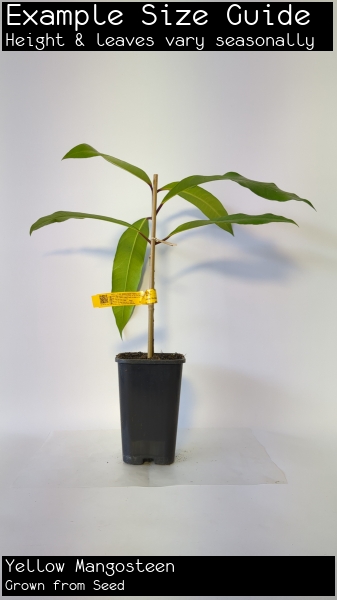
Yellow Mangosteen is a round fruit with very tart yellow segments. The high acidity makes it ideal for jams and jellies but removing the seed and skin can be time consuming. Easier to grow in the subtropics than the purple mangosteen, but the flavour is altogether different. The tree grows well in full sun and shade. It will tolerate and continue to fruit heavily in drought conditions. The tree is very attractive, with large drooping leaves and a layered form. The fruit can reach 8-10 cm in length and looks highly ornamental when in the tree. Pairs so well with a Miracle Fruit to reduce the acid flavour and bring out the interesting tropical flavours.
  Special  

Cape York Turmeric

$19.75 ($19.75-$24.00 choose a size)

A beautiful, native turmeric the rhizomes of which are eaten roasted by First Nations people. Wide, pleated leaves grow to between 1 and 2m high, preferring shady habitat. Yellow flowers with striking pink bracts appear from November onwards.A plant adapted to the monsoonal tropics, so water well in summer and allow to become dry in the cool months.
Aramex Free Freight
  Special  

Chinese Water Chestnut

$7.90 ($2.00-$12.90 choose a size)

This popular Asian cooking ingredient is a tropical member of the sedge family. These nutritious underground corms reaching up to 4cm in diameter have an appealing crisp nut like texture. They can be cooked as a vegetable offering a contrasting texture to many dishes or they can deliver their sweetness and juiciness prepared fresh and raw or lightly steamed or sauteed for salads Water chestnuts can be grown in a pond of a container, an old bathtub or a salvaged water tank cut in half are ideal options. Plant the corms in spring, about 5cm deep into friable soil preferably rich in organic matter and course sand. Keep the plants moist until the shoots are about 10cm tall, then fill the container up with water until it's about 10cm deep, with the tips of the leaves just showing. Leave the container flooded at that depth for about 6-7 months, then drain off the water in late autumn. Leave the soil moist but not wet for another month or so until the shoots die down, then harvest the water chestnuts. Water chestnuts will grow in most areas of Australia, but they are frost tender and require at least an 8-month frost-free growing season. A single corm is said to be able to produce 100 corms within a growing season!
Buy 4+ @$7.90ea usually:$12.90ea

Water Celery Reviews & Tips

Star Rating

Sue Bee
7y ago

Glenormiston South, Victo, Australia, Australia

Water Celery

Can be invasive even in a snmall pond so keep under control by dividing and sharing or eating.Mild celery flavor -also called Chinese celery and Water Parsley which it also resembles slightly in flavor.Chooks love it too.


  • Subscribe
  • Postage Free Truck
  • Plant List
  • Calculate Freight