





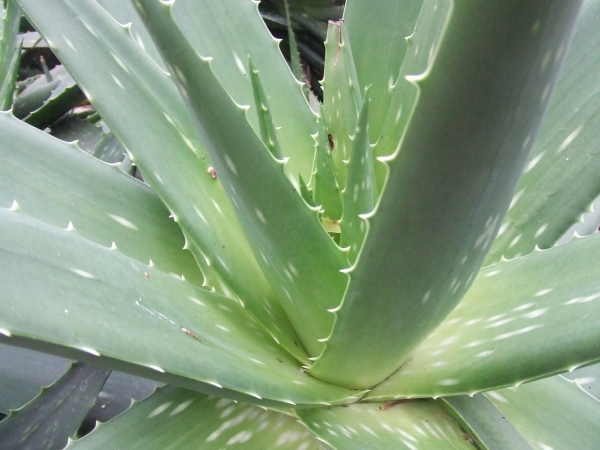
(1/5) Aloe Vera By Tess Watson [CC BY 2.0] (Photo Credits)

(2/5) The orange coloured flower spike of an Aloe vera plant about to open and reveal the bell shaped flowers.

(3/5) Leaf of the Aloe Vera
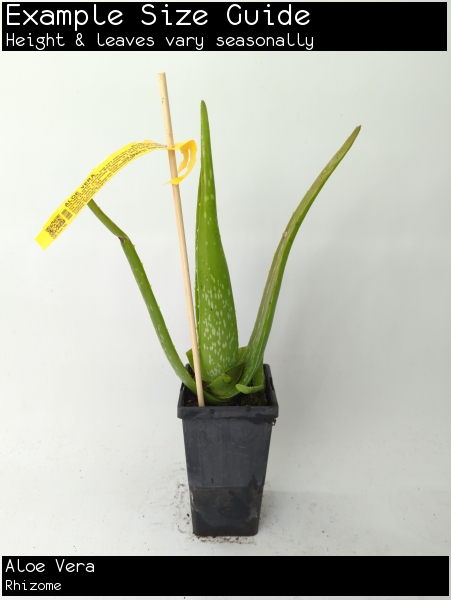
(4/5) Aloe Vera For Sale

(5/5) Aloe Vera For Sale
Aloe Vera
Aloe vera$14.90 ($14.90-$18.75 choose a size)
Specifications of Aloe Vera
Preferred Climate Tropical, Subtropical, Warm Temperate, Cool Temperate, Arid (Dry)Learn About Climate Zones
Grown From RhizomeLearn About Propagation Methods
Max Height (when in the ground with good conditions) 0-1m
Plants required to Pollinate 1 (Self Pollinating)Learn about Pollination
Can it Handle Frosts? Sometimes
Amount of leaves in Winter? All Leaves (Evergreen)
Suitability in Pots Yes
Water Requirements Drought Hardy (Little Watering)
Time to Fruit/Flower/Harvest First Year
Sun or Shade Full (Sun:80%-100%)
Preferred Soil Type Good Drainage
Soil pH Neutral (6.6-7.3pH)
Fruiting/Harvest Months February, March, April, May, June, July, August, September, October, November, December
Create a Filter to find similar plants
Customers also bought
These plants are often purchased together. Also check plant information for suitability in your orchard.
Mango - Florigon
$59.00 ($59.00-$79.00 choose a size)
Lemon - Eureka
$39.00 ($39.00-$49.00 choose a size)

Pepper - Black
$29.00 ($29.00-$39.00 choose a size)


Finger Lime - Rosebank Red
$24.00 ($24.00-$49.00 choose a size)
Dwarf Apple Duo - Dorsett-Anna
$99.00
Dwarf Lime - Tahitian
$44.00

Customer Tips & Reviews Aloe Vera
Bellbird Park, QLD, Australia
Growing full sun and spreading almost like wildfire, is great for burns on the skin.
Aloe Vera
Great for sunburn or itchy bites - split open a leaf longways and use the inside to spread the soothing gel over the skin directly. Grows well in pots in the shade. Snails like to hide in the pots, so they make good snail traps.
Aloe Vera
Separate new shoots often into individual pots, or grow in raked gravel to create a 'healing' zen garden. My one plant has multiplied many times over so that almost every member of my family has at least 5 plants!