








Pleystowe Fruit Trees (Popular)
Pleystowe Fruit Trees and the most popular plants Australians buy for mail order. With fruit trees you should consider climate suitability.
Cherimoya - White
$99.00
Cherimoya is a very heavy cropper of large fruit with juicy flesh that can be a little gritty just below the skin. The unique flavours suggests a hint of mango-papaya. A pleasure to eat due to its low seed count. A commercial favourite in California. Because of it's flavour many people have nicknamed it the "Queen of Fruits" because it's flavour is so much better than other custard apples.The foliage is delicate on young trees, and our potted plants are known for their older leaves to turn yellow and drop during transport to conserve energy. This is not a problem long term. With care and acclimatisation they will bounce back
Special
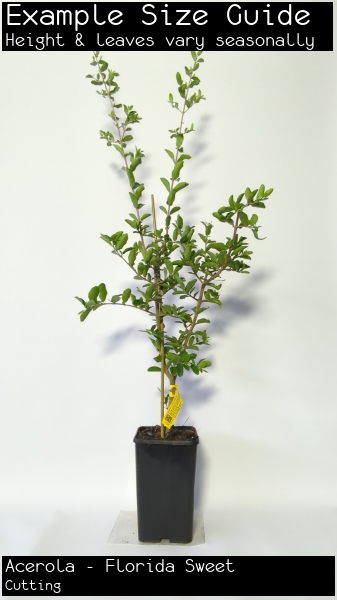
Acerola - Florida Sweet
$29.00 ($18.75-$79.00 choose a size)
This bright red cherry like fruit has varying tastes during different stages as it ripens. When fully ripe the fruit is juicy and aromatic with its acid content giving it a sweet acid apple-like flavour. The tree can produce a number or crops each year, making for quite a long harvest season. Our selection is called the acerola Florida Sweet Cherry and is a pleasant eating variety that is not too sour. The acerola is well suited to pot culture where it can be kept to a smaller size. It could also be grown this way in cooler climates where it can be moved to a warmer position in the winter. A word of warning the foliage of the plant is covered in tiny irritating stinging hairs that can produce an allergic reaction. When pruning your trees wear a long sleeved shirt and a pair of gloves.



Buy 1+ @$29.00ea usually:$34.00ea
Dwarf Mulberry - Red Shahtoot
$49.00 ($29.00-$99.00 choose a size)
Much more compact in growth habit than the King White Shahtoot. These delicious sweet fruits can reach 10cm in length. Ideal for back yards and we consider it a must have fruit tree for the back yard. The best way to eat mulberries is fresh from the tree. If some should make it to the kitchen bench they make excellent pies, jams, wines and sauces. Multiple crops are possible by pruning directly after your first crop. Suitable for most regions of Australia, although it can be susceptible to damage from late frosts. The red shahtoot is ideal for growing in pots and containers due to it small growing habit and it is ideal for school gardens as it does not produce fruits that stain and the sweet fruits are very appealing to children. This variety is best suited to warm subtropical climates and does not perform well in temperate climate where it tends to drop their fruit.


Malabar Chestnut
$14.90 ($14.90-$59.00 choose a size)
Also known as Saba Nut, this medium sized, fast growing tree is grown in many parts of the world. It makes a beautiful landscape specimen and an attractive indoor plant. The large white flowers are very fragrant, another reason to have it in the garden. Overall, this versatile tree is a handsome landscape addition. The seeds have been recommended for eating eaten either raw or roasted, however recent research has indicated that there may be toxic compounds present that are not neutralised through cooking. When roasted or fried in oil they taste like chestnuts or cashews They can also be ground and used as a flour substitute when baking bread. The young leaves and flowers have also been cooked and eaten as a vegetable, however no mention is made of this in the research. Production of nuts starts within a few years. The large, white, self-fertile flowers display spectacular clusters of 10cm cream-white stamens. The fruit is a woody green five-valved pod up to 30cm in length. The capsules that follow burst open when the seeds are ripe. The plant grows well in mild inland and coastal areas. The plant will tolerate brief exposure to low temperatures but won't tolerate frost. A frost-free location with some protection from hot, drying winds is the best choice for the plant. It will take full sun to partial shade. Malabar chestnuts are not overly fussy about soil as long as it is well drained. They are semi-deciduous. WARNING: SEEDS SHOULD NOT BE EATEN


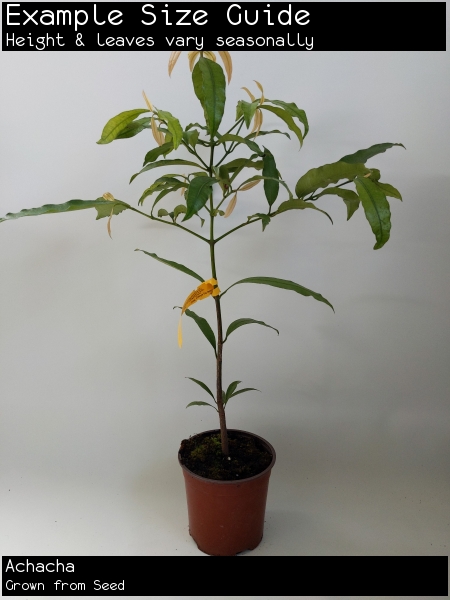
Achacha
$39.00 ($27.00-$129.00 choose a size)
A cousin of the mangosteen, Achachas are tangy and refreshing with a delicate subtle sweetness, a fine balance between sweetness and acidity, producing an unusual taste sensation. Fruit should be picked mature as it does not ripen further on storage. Originating from the Bolivian part of the Amazon basin in South America, the Bolivian name of the fruit is Achachairu and translated means honey kiss


Pre Order Options
pin_drop
This Postcode: 4741
place Seaforth (qld) Fruit Trees place Farleigh Fruit Trees place Kuttabul Fruit Trees place Gargett Fruit Trees place Ball Bay Fruit Trees place Eton Fruit Trees place Mount Ossa Fruit Trees place Oakenden Fruit Trees place Pleystowe Fruit Trees place Mackay Mc Fruit Trees place Owens Creek Fruit Trees place Kinchant Dam Fruit Trees place Pinnacle Fruit Trees place Yalboroo Fruit Trees place Brightly Fruit Trees place Mackay Fruit Trees place Hampden Fruit Trees place Coppabella Fruit Trees place Clairview Fruit Trees place The Leap Fruit Treespin_drop