







Belgrave Fruit Trees (Popular)
Belgrave Fruit Trees and the most popular plants Australians buy for mail order. With fruit trees you should consider climate suitability.
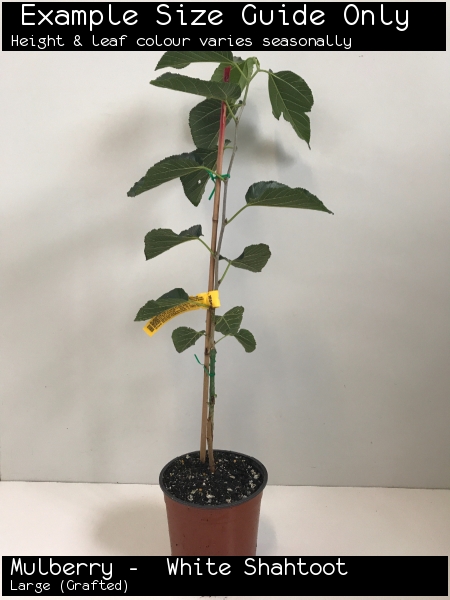
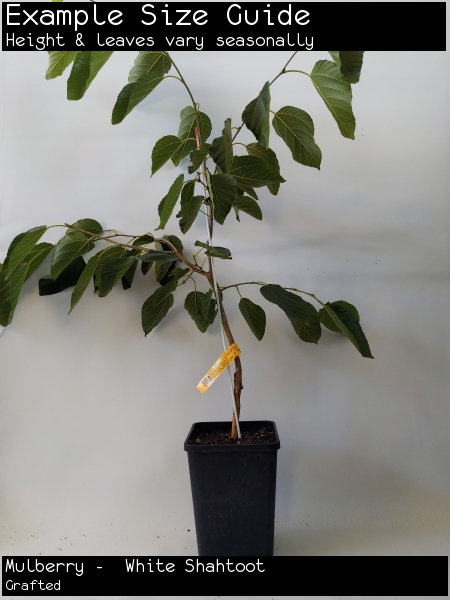
Mulberry - White Shahtoot
$49.00 ($29.00-$129.00 choose a size)
Large, sweet fruit can reach up to 10cm in length. Delicious eaten fresh but can also be sundried and eaten as a sweet. Medium sized, spreading tree with a weeping habit, excellent shade tree. Birds love them too so make sure you cover them if you don't want to share. You can also get multiple crops by pruning immediately after your first crop.
Yuzu - Grafted
$49.00 ($49.00-$99.00 choose a size)
Native to China, the Yuzu has been used and cultivated in this region for thousands of years. The fruit is tart, resembling a grapefruit with mandarin overtones. It is rarely eaten as a fresh fruit but is used to makes sauces, preserves and a popular yuzu vinegar. In Korea thinly sliced fruits are combined with sugar and honey to make a thick marmalade like syrup. Yuzu kosho is a spicy Japanese sauce made from green or ripe yellow yuzu zest, chillis and salt. The yuzu is more cold tolerant than most other citrus, being able to tolerate to -5 degrees

Special
Jujube - Shanxi Li
$89.00 ($89.00-$139.00 choose a size)
Crisp, sweet, great eating fresh or dried and easily the largest of all the jujube varieties. While partially self fertile plant two or more to cross pollinate and get a heavier crop.


Buy 1+ @$89.00ea usually:$119.00ea
Special
Jujube - Li
$89.00 ($89.00-$139.00 choose a size)
Large and round in shape. The texture is crisp and fresh fruit have an excellent flavour. Fruit can be picked at the yellow/green stage however the best flavour is obtained when half the fruit has turned reddish brown. Mature fruits are 40-60mm in diameter. Early - Mid season ripening (Feb-April) Self fertile


Buy 1+ @$89.00ea usually:$119.00ea
Dwarf Persimmon - Fuyu (NA)
$79.00 ($79.00-$79.00 choose a size)
Fuyu is a semi-dwarf variety, well suited to growing in small backyards and can be kept to 2m with pruning. The fruit is large and flat, orange-red in colour with a sweet, mild flavour. Great eaten crunchy but just luscious when left to go soft. Besides producing delicious fruit, Persimmons are highly ornamental with their beautiful autumn foliage. Non astringent, so can be eaten when still hard. When young, protect from hot afternoon sun, and when dormant, from wet conditions. Seedless when grown on their own. If cross pollinating with another variety they can have seeds in the flesh as shown in the display picture.