







Elphinstone Fruit Trees (Popular)
Elphinstone Fruit Trees and the most popular plants Australians buy for mail order. With fruit trees you should consider climate suitability.
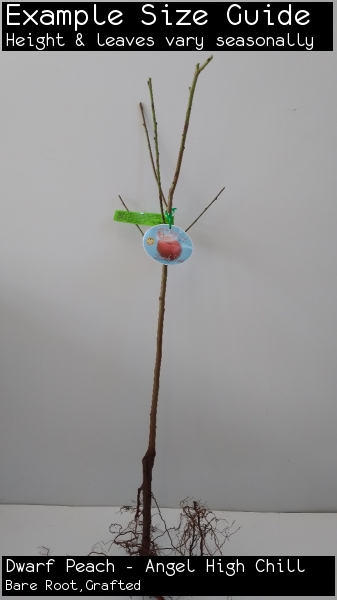
Dwarf Peach - Angel High Chill
$79.00 ($69.00-$79.00 choose a size)
A new dwarf selection of the Angel Peach. It has donut shaped fruit and is a very sweet white fleshed freestone variety, which is more soft and juicy in texture compared with standard peaches. Performs best in temperate climates.
Dwarf 2 Way Trixzie® Cherry - Minnie Royal/Royal Crimson
$119.00
Low chill 2 way cherry tree on super dwarfing rootstock. Two varieties in one tree to cross pollination for more fruit set. Sweet, flavourful red to deep red cherries. A favourite for all. May be suited to cooler areas of the subtropics. Full sun, free draining soil.

Dwarf 2 Way Trixzie® Nectazee / Pixzee (TM)
$109.00
Superstar dwarf stone fruit combination. Yellow fleshed Nectarine and Peach on the one tree. Grow this special tree in a pot or in the ground. Full sun, great drainage and enjoy all the fruits.

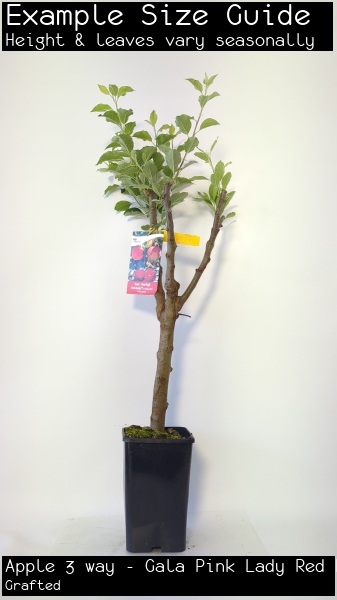
Apple 3 way - Gala Pink Lady Red Fuji
$109.00 ($109.00-$109.00 choose a size)
Multigraft trees are an alternative for small gardens where space is limited and several types of fruit are desired. Suitable cultivars for cross pollination have been grafted on to the one tree. Gala is Early to mid-season. Red Fuji, Mid- to late season and Pink Lady is a late season variety.

Truffle - Black - English Oak
$109.00
The Black Truffle originates in France, in the region of Perigord. It is very aromatic and is highly valued with chefs and restaurants. The vast majority of the truffles that are grown in Australia are this one. It is harvested typically from June through to the end of August. It has a black peridium (skin) and the glebra (fruit body) is black with thin white veins. The host tree is the deciduous English oak, Quercus robur, which produce acorns, and the roots of the tree are inoculated with truffle mycorrhiza. In Europe, truffles thrive in nutrient poor, calcareous (lime) soils and a temperate climate. Therefore to establish a truffiere in Australia you will require an area with a similar climate, including rainfall & winter frosts, sufficient available water for drought proofing, and apply sufficient lime to replicate the European soil types. They need cold winter temperatures with a few frosts. Hot summer temperatures for initiating truffle formation. Free draining soils, suitable for altering with lime. Sufficient rainfall or irrigation water.