








Baskerville Fruit Trees (Popular)
Most popular is what other people in your area are buying. Remember they may be experimenting and it may not mean they are suitable for this climate. Daleys only sends to WA a few times per year. Please check WA Mail Order Schedule
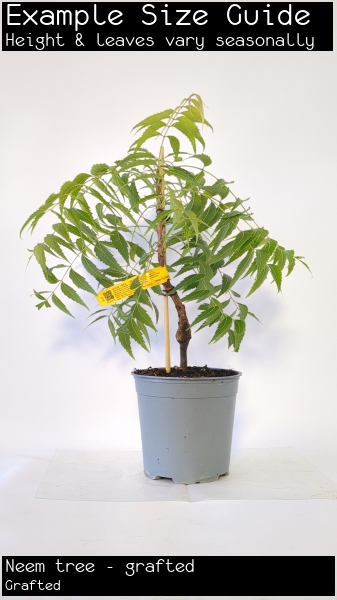
Neem tree - grafted
$109.00
Often called the Wonder Tree, the neem has been used for centuries in Asia against insects and for some medicinal purposes. The natural insecticide azadirachtin can be extracted from the seeds of the neem tree. Grafting onto the White Cedar rootstock allows for a stronger root system in cooler regions and less problems with dieback in winter. Removal of any shoots from below the graft is essential maintenance to maintain your grafted neem. Weed warning: in Dry Tropics Neem tree regenerates easily and can be a weed problem. Not a problem in subtropical regions.
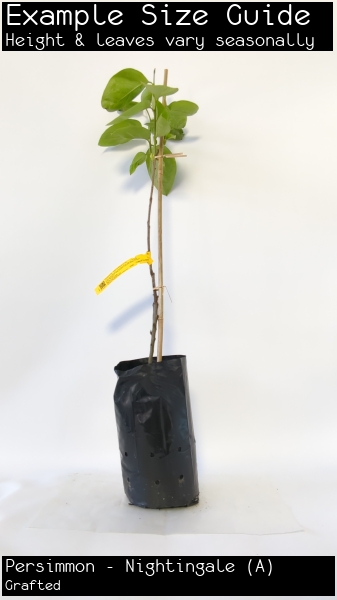
Persimmon - Nightingale (A)
$79.00 ($69.00-$79.00 choose a size)
A deep-orange flesh that is very sweet and juicy when ripe. A conical large shape. Very high quality flesh that is most often seedless. Compact growing. Astringent
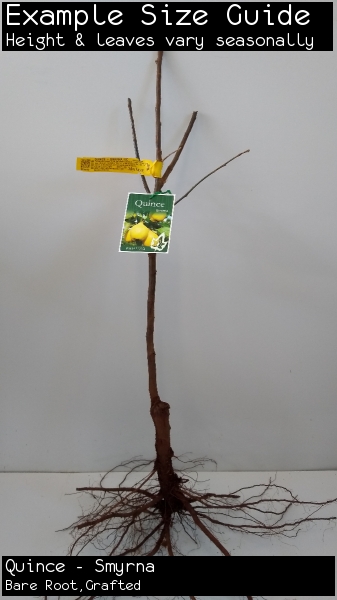
Quince - Smyrna
$59.00 ($49.00-$59.00 choose a size)
Add some gourmet to your garden! The quince is valued for its high pectin content and is used frequently in jams, jellies and cosmetics. This fruit is one of the few that must be cooked as it is too tart, hard and unpalatable to eat raw. The quince tree has been cultivated by people for thousands of years. Originating from Turkey and Iran this is a fruit with a fascinating history, it features strongly in the history and mythology of both Greece and Rome. Trees are very long lived and have a beautiful, gnarly twisted appearance, they are exceptionally hardy and can withstand both periods of dry and severe cold. 'Smyrna' is a Turkish variety of Quince with extremely large fruit, light yellow flesh and bright yellow skin. It can be grown as an attractive tree (or multi-stemmed shrub) and has dark green foliage and a very showy bloom

Guiana Chestnut
$39.00 ($39.00-$49.00 choose a size)
Fragrant, stunning flowers distinguish the Guiana Chestnut. Makes a beautiful landscape tree. Native to estuaries and lake shores in the tropical rainforests of Mexico, Central and South America The seeds have been recommended for eating eaten either raw or roasted, however recent research has indicated that there may be toxic compounds present that are not neutralised through cooking. When roasted or fried in oil they taste like chestnuts or cashews They have also been ground and used as a flour substitute when baking bread. The young leaves and flowers have also been cooked and eaten as a vegetable, however no mention is made of this in the research.It has also been suggested fungal organisms may be converting oils into inedible compounds. Production of nuts starts within a few years. The large, white, self-fertile flowers display spectacular clusters of 10cm cream-white stamens. The fruit is a woody green five-valved pod up to 30cm in length. The capsules that follow burst open when the seeds are ripe. The plant grows well in mild inland and coastal areas. The plant will tolerate brief exposure to low temperatures but won't tolerate frost. A frost-free location with some protection from hot, drying winds is the best choice for the plant. It will take full sun to partial shade. Malabar chestnuts are not overly fussy about soil as long as it is well drained. They are semi-deciduous. The flowers of the Guiana chestnut are spectacular, they emerge from foot long buds where they are almost hidden amongst the dense foliage. The long dark red brown coloured petals droop and disappear to show off the dramatic clusters of scarlet tipped stamens. The fruits that follow the flowers are football shaped large woody pods that can reach 30cm in length. The tightly packed nuts inside enlarge until the pods burst open to reveal them. The Guiana Chestnut does best in sites that are protected from drying winds, it can be grown in full sun or part shade and it requires frequent and generous watering. WARNING: SEEDS SHOULD NOT BE EATEN


Wampee - Guy Sam
$49.00 ($49.00-$79.00 choose a size)
This grafted variety has a sweet tangy aromatic flavour. Wampees are a handsome foliage evergreen tree grown for Summer ripe fruit with grape like flesh that hang in bunches. When grown on its own the fruit is seedless. Excellent tree for the subtropics and can be kept under 3 metres with pruning.

pin_drop