







White Chokos freshly picked for making warming Autumn/Winter food

(1/6) White Chokos freshly picked for making warming Autumn/Winter food

White Choko an abundant veg for roasts, stirfrys, chutneys, desserts and more

(2/6) White Choko an abundant veg for roasts, stirfrys, chutneys, desserts and more

A comparison of Green and White chokos. Both are quick easy to grow in good conditions and delicious to eat.

(3/6) A comparison of Green and White chokos. Both are quick easy to grow in good conditions and delicious to eat.

Leaf of the Choko

(4/6) Leaf of the Choko

Choko - White For Sale

(5/6) Choko - White For Sale

Choko - White For Sale

(6/6) Choko - White For Sale

fullscreen1

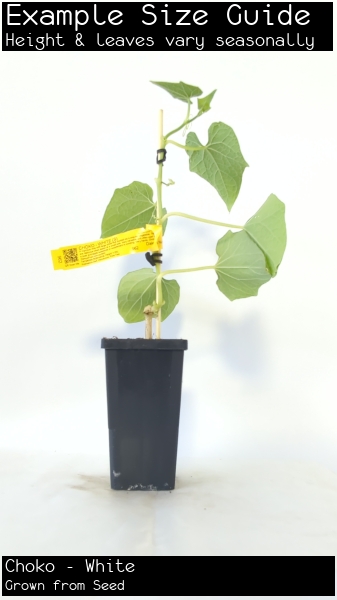
Choko - White

Sechium edule
A vigorous vine with large white fruit cooked as a popular vegetable. They are delicious when eaten at a small size. Very versatile and often used as a pear and apple substitute or supplement in cooking. Very hardy. Choko plants are perennial but die back... Read More
Other Names: Chayote, Xuxu

$19.75 ($7.75-$19.75 choose a size)

Shop Similar

event_busy When will it be in Stock?

We previously had the most to buy in Oct and Dec. With limited quantities for sale in other months. They are unlikely to be available in Sep and Apr. Special Note: This plant is in the top 25% of plants customers are wanting to know about. It is very unlikely that you will be able to purchase this plant unless you click above to be notified when it is in stock again. Please expect a delay on this item as we notify those who have waited the longest .

Specifications of Choko - White

Preferred Climate Warm Temperate, SubtropicalLearn About Climate Zones

Grown From SeedlingLearn About Propagation Methods

Max Height (when in the ground with good conditions) 1-2m

Plants required to Pollinate 1 (Self Pollinating)Learn about Pollination

Can it Handle Frosts? Yes

Amount of leaves in Winter? No Leaves (Deciduous)

Suitability in Pots Yes

Fruiting/Harvest Months , February, March, April, May, June

Customers also bought

These plants are often purchased together. Also check plant information for suitability in your orchard.

Fig - Picone Black

$49.00
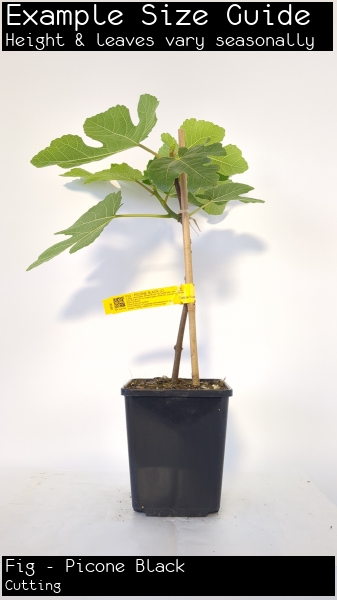
A shiny, dark purple, skinned fig with very sweet flesh. Selected by a local fruit grow for the superb quality of the fruit. Sourced from Picone Exotic Orchards

Lime - Australian Desert 'Abundance' PBR

$99.00

Selection of unique native Lime from inland Australia, with great flavour and zing. "Abundance" is an earlier ripening cultivar with outstanding adaptation to heat and cold from its natural habitat. Trees grow to only 2.5m. Plants are thorny to prevent herbivores from browsing but top-most branches out of their reach are thornless and these quality grafted plants are produced from these thornless upper branches. From flowering to fruiting is generally only 3 months, making this a great backyard plant. This plant has Plant Breeder's Rights over it.

Lime - Australian Desert 'Standout' PBR

$99.00

Selection of unique native Lime from inland Australia, with great flavour and zing. "Standout" is a later ripening selection with large fruit and leaves. Desert Limes have outstanding adaptation to heat and cold from its natural habitat. Trees grow to only 2.5m. Plants are thorny to prevent herbivores from browsing but top-most branches out of their reach are thornless and these quality grafted plants are produced from these thornless upper branches. From flowering to fruiting is generally only 3 months, making this a great backyard plant. This plant has Plant Breeder's Rights over it.

Nam Nam

$49.00

Belonging to the bean family the nam nam is a small multi-stemmed tree. The texture of the fruit surface is rough and wrinkled, pale greenish/yellow and dull looking. The flesh is juicy and yellow in colour. It tastes sourish and has large seeds. The mature fruit can be eaten fresh or cooked with sugar to make sweets (compote). It can also be made into a fruit salad, pickled, or be used to prepare a special 'sambal.' The tree makes an attractive ornamental plant in home gardens and is also potted and grown as bonsai plant.Suited to tropical areas only

Cassava - Yellow

$21.00

The tuberous root is light yellow and flavour is richer than the white, tasting a lot like potato. This is the sweet variety producing smaller but more nutritious tubers. Harvest can start from earlier than 12 months. Tubers are best dug when small and used within a couple of days or stored in the ground on the plant.Cassava is a shrubby plant growing to about 1-3m, with thin stems and attractive large palm-shaped leaves. A perennial shrub cassava produces a high yield of tuberous roots in 6 months to 3 years after planting. The tubers are the main part that is eaten, but the leaves can be enjoyed as a vegetable dish. Cassava is an important daily source of starch for 300-600 million of the poorest people around the world. It is among the most productive uses of subsistence land, producing 40% more starch than rice, and 25% more than maize. Note that all cassava is poisonous!! In some bitter varieties, all parts of the plant are laced with a highly toxic poison (hydrocyanic or prussic acid). Sweet varieties have lower or marginal concentrations of the toxin. But the more toxic varieties produce bigger tubers! Plants from the tropics have evolved toxins as a defence against predators more so than those from temperate climates which is why they require cooking in order to eat them. Thorough cooking dispels or denatures the harmful toxins, and makes the remaining portion safe to eat. Powdered cassava is treated like a flour and made into cakes, unleavened bread, pasta, crackers. Sliced cassava is also made into crisps. Flat bread made from cassava meal can keep for a year without spoiling. Dried chips or pellets are used as animal feed. Young tender leaves are rich in Vitamin B and protein, but also has more of the toxins. They are eaten as a vegetable. Like the tubers, they have to be boiled for minimum 15-20 mins in an open topped vessel to remove their toxins.Best grown without the use of fertilisers as too much vegetative growth is promoted at the expense of tubers
Shop Similar

Yellow Mangosteen

$34.00 ($24.00-$79.00 choose a size)

Yellow Mangosteen is a round fruit with very tart yellow segments. The high acidity makes it ideal for jams and jellies but removing the seed and skin can be time consuming. Easier to grow in the subtropics than the purple mangosteen, but the flavour is altogether different. The tree grows well in full sun and shade. It will tolerate and continue to fruit heavily in drought conditions. The tree is very attractive, with large drooping leaves and a layered form. The fruit can reach 8-10 cm in length and looks highly ornamental when in the tree. Pairs so well with a Miracle Fruit to reduce the acid flavour and bring out the interesting tropical flavours.

Choko - White Reviews & Tips

Star Rating

Carole McKechnie
★★★★★ 5y ago

Yamba, NSW, Australia

Choko - White

Love them good for plckles good to eat

Mildred T. Ambatang
★★★★★ 5y ago

Baguio city, Philippines

Choko - White

Id known its english name when i was 15...choco grows so well here in my province because of the cold weather.. sauted choco when sliced in strips are delicious... slicing them into cubes can be to boiled chicken. It can be veg salad also.

branny1
★★★★ 10y ago

RUNCORN, QLD, Australia

I didn't buy a choko plant. I bought a choko from my local coles, and sat it in the kitchen. A week later, I had fifteen cm of vine coming from the top.I have literally done bugger all to get this to grow. I had a large styrofoam container -the type yo...

sonya
★★★★ 16y ago

Capella, Qld, Australia

I did have to eat them as a child, but as a gardener always wanted to grow one successfully, after a lot of trying I have one in Capella,Central Highlands of Queensland. Having read about the tubers you can bandicoot in my Organic Gardening Aust. Jacqu...


  • Subscribe
  • Postage Free Truck
  • Plant List
  • Calculate Freight