








Cotham Fruit Trees (Popular)
Cotham Fruit Trees and the most popular plants Australians buy for mail order. With fruit trees you should consider climate suitability.
Sandalwood - Indian
$129.00 ($69.00-$129.00 choose a size)
Medium-sized hemiparasitic trees that attach themselves to the root system of nearby plants from which they extract water and minerals. Pinto Peanut and Acacia are suitable hosts as they are a legume and hence a natural nitrogen source. Keep Acacias pruned so they dont over take growth of Sandalwood. Used in the production of sandalwood oil, trees are harvested from 8 years and the entire tree is used for oil production including the roots and stump. The production of sandalwood in India and Nepal is strictly controlled by the government who owns all the trees, however illegal harvesting and smuggling is a problem due to the high value of sandalwood oil.

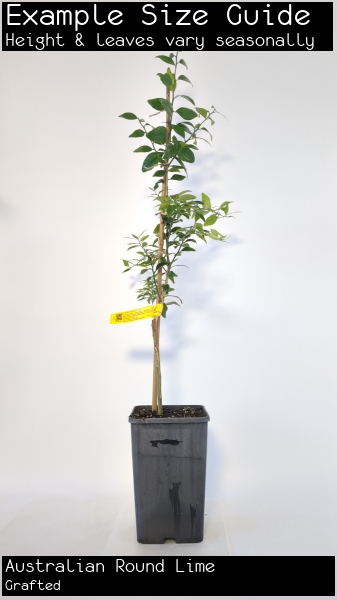
Australian Round Lime
$49.00 ($29.00-$49.00 choose a size)
The round knobbly fruit, usually reaching 3.5-4 cm in diameter have a distinctive and recognisably citrus flavour, with a similar globular texture to the more commonly known Finger Lime. Also known as Dooja or Gympie lime. Occurs naturally on the fringe of lowland sub-tropical rainforests of southeast Qld, from Brisbane northwards. This slender tree can reach up to 15m in height and 6-8m in diameter with multiple trunks, making it the most vigorous of the native citrus. The round lime is suitable for including in cordials, sauces, marmalades and lime flavouring. The skin is very thick (up to 7mm) and has potential for culinary use, such as grating into spice pastes, or for candied peel and may also have potential for essential oil extraction.

Pepper - Black
$29.00 ($29.00-$39.00 choose a size)
Cultivated for the fruit which is dried and used as a spice and seasoning. The fruits are dark red when fully ripe. Immature fruits can be picked as green pepper, black pepper is the fruit dried with the skin on and white pepper is the dried seed only. Black pepper is the worlds most widely traded spice.


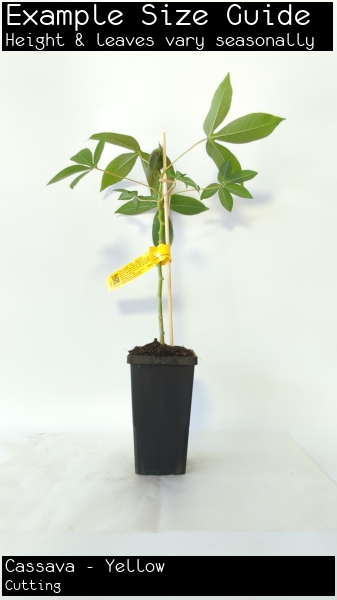
Cassava - Yellow
$21.00
The tuberous root is light yellow and flavour is richer than the white, tasting a lot like potato. This is the sweet variety producing smaller but more nutritious tubers. Harvest can start from earlier than 12 months. Tubers are best dug when small and used within a couple of days or stored in the ground on the plant.Cassava is a shrubby plant growing to about 1-3m, with thin stems and attractive large palm-shaped leaves. A perennial shrub cassava produces a high yield of tuberous roots in 6 months to 3 years after planting. The tubers are the main part that is eaten, but the leaves can be enjoyed as a vegetable dish. Cassava is an important daily source of starch for 300-600 million of the poorest people around the world. It is among the most productive uses of subsistence land, producing 40% more starch than rice, and 25% more than maize. Note that all cassava is poisonous!! In some bitter varieties, all parts of the plant are laced with a highly toxic poison (hydrocyanic or prussic acid). Sweet varieties have lower or marginal concentrations of the toxin. But the more toxic varieties produce bigger tubers! Plants from the tropics have evolved toxins as a defence against predators more so than those from temperate climates which is why they require cooking in order to eat them. Thorough cooking dispels or denatures the harmful toxins, and makes the remaining portion safe to eat. Powdered cassava is treated like a flour and made into cakes, unleavened bread, pasta, crackers. Sliced cassava is also made into crisps. Flat bread made from cassava meal can keep for a year without spoiling. Dried chips or pellets are used as animal feed. Young tender leaves are rich in Vitamin B and protein, but also has more of the toxins. They are eaten as a vegetable. Like the tubers, they have to be boiled for minimum 15-20 mins in an open topped vessel to remove their toxins.Best grown without the use of fertilisers as too much vegetative growth is promoted at the expense of tubers
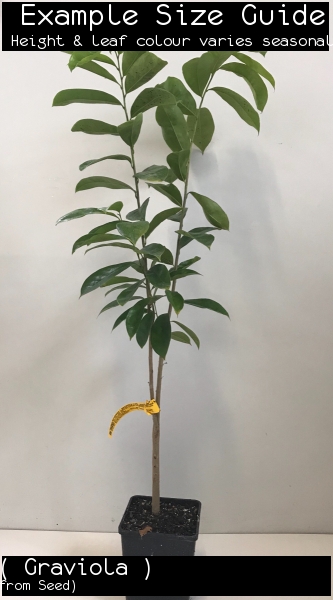
Soursop
$34.00 ($17.75-$49.00 choose a size)
The fruit is heart-shaped with a rough green skin and soft fleshy spines. The fresh meaty flesh is juicy and slightly acid producing a rich creamy thirst quenching juice. Superb when fruit is pureed with 1/3 of vanilla ice-cream. Also known as Graviola or Guanaban. Not suitable for temperate climates. But it's more than just a sweet treat.

pin_drop