






Avalon Fruit Trees (Popular)
Avalon Fruit Trees and the most popular plants Australians buy for mail order. With fruit trees you should consider climate suitability.
Pepper - Black
$29.00 ($29.00-$39.00 choose a size)
Cultivated for the fruit which is dried and used as a spice and seasoning. The fruits are dark red when fully ripe. Immature fruits can be picked as green pepper, black pepper is the fruit dried with the skin on and white pepper is the dried seed only. Black pepper is the worlds most widely traded spice.


Cassava
$19.75 ($9.50-$19.75 choose a size)
The tuberous root is white and has a satisfying but bland taste. Harvest can start from earlier than 12 months. Tubers are best dug when small and used within a couple of days or stored in the ground on the plant.Cassava is a shrubby plant growing to about 1-3m, with thin stems and attractive large palm-shaped leaves. A perennial shrub cassava produces a high yield of tuberous roots in 6 months to 3 years after planting. The tubers are the main part that is eaten, but the leaves can be enjoyed as a vegetable dish. Cassava is an important daily source of starch for 300-600 million of the poorest people around the world. It is among the most productive uses of subsistence land, producing 40% more starch than rice, and 25% more than maize. Note that all cassava is poisonous!! In some bitter varieties, all parts of the plant are laced with a highly toxic poison (hydrocyanic or prussic acid). Sweet varieties have lower or marginal concentrations of the toxin. But the more toxic varieties produce bigger tubers! Plants from the tropics have evolved toxins as a defence against predators more so than those from temperate climates which is why they require cooking in order to eat them. Thorough cooking dispels or denatures the harmful toxins, and makes the remaining portion safe to eat. Powdered cassava is treated like a flour and made into cakes, unleavened bread, pasta, crackers. Sliced cassava is also made into crisps. Flat bread made from cassava meal can keep for a year without spoiling. Dried chips or pellets are used as animal feed. Young tender leaves are rich in Vitamin B and protein, but also has more of the toxins. They are eaten as a vegetable. Like the tubers, they have to be boiled for minimum 15-20 mins in an open topped vessel to remove their toxins.Best grown without the use of fertilisers as too much vegetative growth is promoted at the expense of tubers


Special
Pigeon Pea
$3.90 ($3.90-$18.90 choose a size)
A woody, fast growing leguminous shrub, to 5m, with yellow and red flowers. It is hardy, widely adaptable and tolerant of temperatures as high as 35C. It can be killed by heavy frost. The seeds are 25% protein, can be eaten fresh or as split dried peas, are used for dhal in India, contain 5 times more Vitamin A and C than green peas. The leaves and young shoots can be eaten cooked, they are fibrous and have a strong spicy odour. Animal Fodder; an excellent feed for cattle, pigs and poultry. Green Manure; incorporate the plants as they flower. Mulch production; can be cut many times in a season. Windbreaks; suitable as a shelter belt around vegetable gardens and plants provide nitrogen, habitat and soil stabilisation. Permaculture - plant on west side of newly planted trees to provide wind and sun shelter and a ready source of mulch. Prune back to control growth and use as mulch on your young tree.


Buy 16+ @$3.90ea usually:$4.90ea
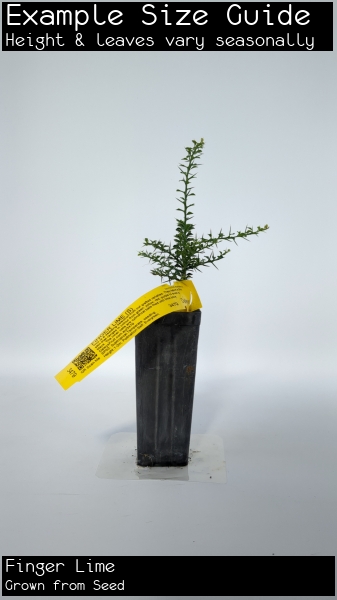
Finger Lime
$19.90 ($7.50-$19.90 choose a size)
This is a seedling selection from our grafted varieties. They have a thin skin that ranges in colour from green, yellow, red, purple to even a black. The inner cells are cylindrical balls filled with lime juice. Very hardy. The bushy thorny foliage is a perfect protective habitat for small birds to nest in addition to their fruits.